Why Is American Steel So Expensive for Global Buyers?

Why Is American Steel So Expensive for Global Buyers?

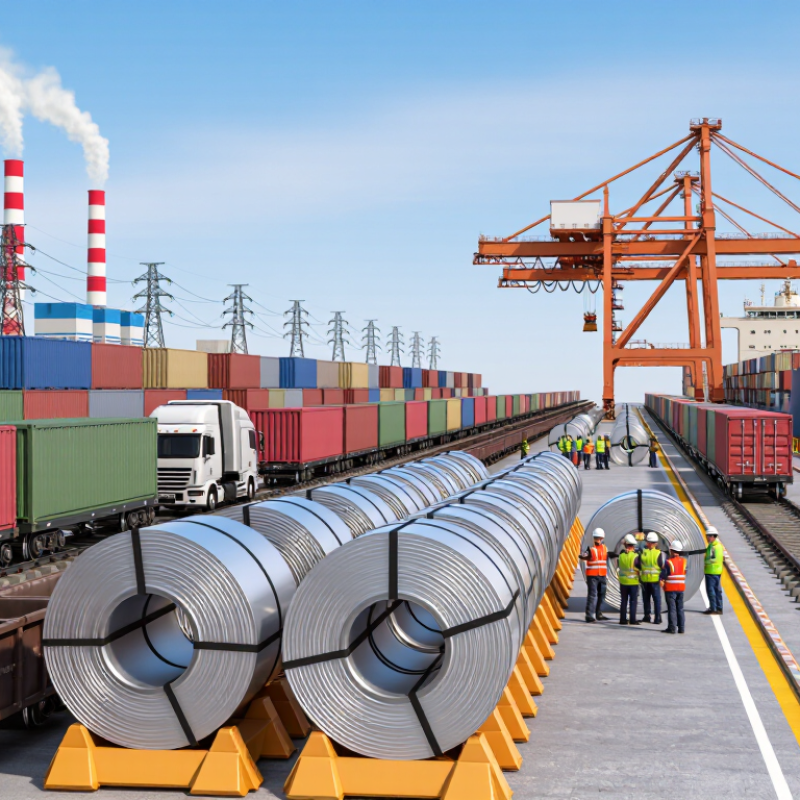
American steel often carries a higher price before it reaches an overseas customer. The difference is not explained by tariffs alone. Domestic mills face elevated electricity costs, skilled-labor expenses, environmental compliance, and inland freight charges. A coil may travel by rail from Ohio to a Gulf Coast port before crossing the ocean. Every transfer adds cost.

The American Iron and Steel Institute reported that U.S. crude steel production reached approximately 80.7 million metric tons in 2023. That output remains significant, but it is small beside global production of about 1.89 billion tons, according to the World Steel Association. Scale matters. Larger Asian producers can spread operating costs across broader export volumes. The OECD’s Steel Market Developments reports also highlight persistent global excess capacity and uneven demand. These pressures make international pricing difficult to compare fairly.

Peter F. Marcus, founder of World Steel Dynamics, describes steel as “a cyclical business.” That short observation matters. American steel prices can rise sharply when construction demand strengthens, even while overseas mills compete aggressively. Trade remedies may protect domestic producers, but they can also narrow buyers’ choices. This is where the analysis becomes less comfortable. Higher prices do not always mean better steel, and lower prices do not always represent efficiency. Product grade, delivery reliability, carbon intensity, and financing terms must be measured together. Global buyers therefore pay for more than a ton of steel. They pay for a tightly regulated supply chain, domestic resilience, and sometimes, uncertainty.
Why Is American Steel So Expensive for Global Buyers?

What Makes American Steel More Expensive Than Steel from Other Countries?

Why Is American Steel So Expensive for Global Buyers?

American steel often costs more because production expenses are higher. Mills pay competitive wages, maintain extensive safety programs, and meet strict environmental requirements. These costs appear in every coil, plate, and structural beam.

Energy also matters. Electricity and natural gas prices vary by region and season. A furnace running during expensive peak hours can raise conversion costs quickly. Domestic steelmakers may also use newer equipment, which requires heavy investment and regular maintenance. Those expenses support quality, but buyers still pay for them.

Transportation creates another gap. Steel shipped from an American mill to an overseas port may travel thousands of miles by rail, truck, and vessel. Handling charges accumulate at each stage. Import duties, insurance, financing, and currency changes can increase the delivered price further. Some American producers also make specialized grades in smaller batches. Limited volume usually means less production efficiency.

In procurement reviews, I have seen buyers compare mill prices without checking delivery terms. That can produce a misleading conclusion. A cheaper overseas quotation may exclude inland transport, testing, or port fees. American steel is not always more expensive, either. Local availability, shorter lead times, and reliable documentation can reduce total project costs.

The comparison remains imperfect. Steel prices change with scrap markets, energy contracts, labor negotiations, and regional demand. No single explanation fits every product or shipment.


How U.S. Production Costs Shape the Price of American Steel

American steel often carries a higher price because production costs remain elevated before export begins. The U.S. Energy Information Administration reported industrial electricity prices near 8–9 cents per kilowatt-hour in recent years. That matters because electric arc furnaces consume substantial power while melting scrap. Gas, maintenance, labor, and environmental-control systems add further expenses. None is small.

Raw materials create another pressure point. The U.S. Geological Survey’s Mineral Commodity Summaries identifies steel scrap as a major domestic steelmaking input. Scrap prices can rise when construction and vehicle recycling demand strengthens. Domestic mills may then pay more for material than overseas competitors with cheaper supply chains. Transportation also matters. Moving scrap, slabs, or finished coils across a large country adds fuel and handling charges. A port shipment does not begin at the port.

Labor costs are significant, but they are not the whole explanation. Bureau of Labor Statistics data show that U.S. manufacturing compensation includes wages, insurance, retirement contributions, and paid leave. These costs support skilled furnace operators and strict process controls. They also raise the price per ton. The World Steel Association reported U.S. crude steel output at roughly 80 million metric tons in 2023, far below China’s scale. Smaller output can limit economies of scale. That estimate can mislead. Modern furnaces may be efficient, yet a shutdown, delayed delivery, or weak capacity utilization can spread fixed costs across fewer tons. Global buyers often pay for that uncertainty.

Why Is American Steel So Expensive for Global Buyers? — How U.S. Production Costs Shape the Price of American Steel

Indicative 2023–2024 benchmarks showing the main cost factors that influence the export price of steel produced in the United States.

Cost Dimension U.S. Benchmark International Reference Effect on the Price of American Steel Primary Data Source
Industrial electricity price Approximately US$0.08–0.09 per kWh in 2024, based on the national industrial average. Large regional differences exist; industrial electricity in parts of Europe was commonly around US$0.12–0.18 per kWh, while some Asian markets were lower. Moderate impact overall; a major cost factor for electric-arc-furnace production. U.S. Energy Information Administration; national energy-price statistics, 2024.
Natural-gas cost U.S. benchmark natural gas averaged approximately US$2–3 per million Btu in 2024. European wholesale gas prices were frequently around US$8–13 per million Btu during the same period, depending on the month and exchange rate. A relative advantage for U.S. mills, particularly those using natural gas for reheating, direct reduction, or auxiliary processes. U.S. Energy Information Administration; European wholesale gas market data, 2024.
Electric-arc-furnace energy consumption Typical electricity use is approximately 350–450 kWh per metric ton of liquid steel, depending on scrap quality and operating conditions. Comparable modern electric-arc-furnace operations generally fall within a similar technical range. A difference of US$0.01 per kWh can change the direct electricity cost by roughly US$3.50–4.50 per metric ton. U.S. Department of Energy and metallurgical energy-efficiency studies.
Manufacturing labor cost Average U.S. private-manufacturing hourly earnings were approximately US$32–36 per hour in 2024, before considering the full cost of benefits. Labor costs vary widely. Many competing steel-producing regions have lower direct wage costs, although productivity and automation can offset part of the difference. Higher wages, benefits, safety requirements, and training expenses raise the fixed and conversion costs of U.S. steel. U.S. Bureau of Labor Statistics, average hourly earnings for manufacturing, 2024.
Ferrous scrap input cost Representative U.S. ferrous-scrap prices commonly ranged around US$300–450 per metric ton during 2024, depending on grade and region. Scrap prices in Europe and Asia also varied substantially by grade, collection rates, import demand, and freight costs. Scrap is often the largest raw-material cost for electric-arc-furnace steel, so regional scrap shortages can quickly increase U.S. steel prices. U.S. and international ferrous-scrap market assessments, 2024.
Iron ore and metallurgical-coal exposure Integrated steelmaking remains exposed to imported or domestic iron ore, coal, coke, and limestone. Seaborne iron ore was broadly around US$100–120 per dry metric ton for much of 2024. Global integrated producers are similarly exposed, but the final cost depends on mine ownership, transport distance, coal prices, and coke-oven efficiency. Raw-material costs can narrow or widen the U.S. price gap depending on global commodity cycles. World Bank commodity-price data; international steel and raw-material market statistics, 2024.
Capacity utilization and fixed costs U.S. steel capacity utilization was approximately 75% in 2024 on an annualized basis. Lower utilization in any market increases the amount of depreciation, maintenance, labor, and administrative cost allocated to each ton of steel. A large fixed-cost base means that underused U.S. capacity can raise the per-ton cost even when energy prices are favorable. American Iron and Steel Institute; U.S. steel-industry production statistics, 2024.
Environmental and compliance costs U.S. mills must comply with federal and state requirements covering air emissions, water, waste handling, worker safety, and monitoring. Standards differ by country. Some markets have lower compliance costs, while others impose stricter carbon, energy, or emissions requirements. Permitting, pollution-control equipment, reporting, maintenance, and environmental remediation add to the delivered cost of U.S. steel. U.S. Environmental Protection Agency; Occupational Safety and Health Administration; energy and emissions regulations.
Carbon intensity of production route Typical estimates are approximately 0.4–0.8 metric tons of CO₂ per ton of crude steel for scrap-based electric-arc-furnace production, depending on the power mix. Conventional blast-furnace/basic-oxygen-furnace production is commonly estimated at approximately 1.8–2.3 metric tons of CO₂ per ton. Lower-carbon U.S. steel can command a premium in markets that value emissions performance, although clean-power and reporting costs may increase production expenses. World Steel Association; International Energy Agency; lifecycle-assessment literature.
Import tariffs and trade measures A baseline 25% Section 232 tariff has applied to many steel imports into the United States since 2018, subject to country-specific arrangements, exclusions, and policy changes. Other markets may apply tariffs, quotas, safeguard measures, or anti-dumping duties that alter the landed price of imported steel. Trade barriers can support domestic U.S. prices above the untaxed global benchmark and reduce direct price competition from imports. U.S. Department of Commerce; U.S. International Trade Commission.
Domestic freight and delivery distance Steel may travel long distances by rail, truck, barge, or a combination of modes before reaching a port or overseas customer. International buyers must also add ocean freight, marine insurance, port handling, inland transport, and possible transshipment costs. The delivered price can be substantially higher than the mill-gate price, especially for smaller shipments or distant destinations. U.S. Department of Transportation freight statistics; international shipping-cost benchmarks.
Currency and contract exposure U.S. steel is generally quoted in U.S. dollars, often under contracts linked to domestic raw-material, energy, and freight conditions. Buyers paying in euros, yen, yuan, or other currencies face exchange-rate risk in addition to changes in the steel price. A stronger U.S. dollar raises the local-currency cost for many overseas buyers even when the dollar-denominated mill price is unchanged. International Monetary Fund exchange-rate data; standard steel-trade contract practices.

Note: Figures are rounded, indicative benchmarks rather than quotations for a specific grade, mill, or delivery location. Actual prices vary with steel chemistry, thickness, finishing requirements, order volume, scrap grade, energy contract, freight route, tariffs, exchange rates, and delivery terms. No company or brand-specific data is included.

The Influence of Tariffs, Trade Rules, and Import Restrictions

American steel can become expensive before it reaches a foreign port. A 25% Section 232 tariff applies to many steel products. However, exclusions, quotas, and country arrangements can change the effective rate. Buyers must check the exact tariff code.

Trade rules create another layer of cost. Anti-dumping and countervailing duties may apply to specific products or exporters. Origin requirements also demand detailed records, including heat numbers and processing history. One missing document can delay customs clearance. The United States International Trade Commission reports that trade remedies can influence both import volumes and domestic prices. These costs often appear in quotations as risk premiums.

The pressure is not only legal. The OECD Steel Outlook 2024 projects 157 million tonnes of new global steelmaking capacity by 2026. Meanwhile, the World Steel Association expects global steel demand to reach about 1.75 billion tonnes in 2025. Supply may grow faster than consumption. That imbalance should reduce prices, but import restrictions can prevent buyers from accessing the cheapest material. Energy, labor, inland freight, and scrap costs also matter. Some assumptions deserve checking. Tariffs are visible; compliance costs are less visible. A more honest comparison should include duties, port storage, inspection fees, and delivery delays.

Why Transportation, Energy, and Labor Costs Matter to Global Buyers

Why Is American Steel So Expensive for Global Buyers?

American steel prices reflect more than the mill-gate quote. Transportation often becomes the hidden invoice. UNCTAD’s Review of Maritime Transport 2024 reports that ships carry over 80% of global trade by volume. Steel still requires port handling, ocean freight, customs processing, and inland delivery. A coil may travel by rail, truck, vessel, and truck again. Distance hurts. These transfers add handling charges, delays, and exposure to fuel-price changes.

Energy is another major cost driver. The International Energy Agency’s Iron and Steel Technology Roadmap estimates that energy can represent 20% to 40% of steelmaking costs. The share depends on the production route, fuel mix, and plant efficiency. U.S. Energy Information Administration data placed industrial electricity near 8 cents per kilowatt-hour in 2024. That sounds modest. It becomes significant across millions of kilowatt-hours. Gas and power contracts also respond to weather, grid limits, and regional supply.

Labor creates a less visible premium. U.S. Bureau of Labor Statistics compensation data show benefits represent roughly 30% of private-industry compensation. Steel facilities need trained operators, maintenance crews, safety staff, and engineers. Wages are only part of the equation. Training, insurance, compliance, and downtime also matter. A comparison between a U.S. ex-works quote and a low-cost delivered offer can be misleading. The assumption is imperfect. One overlooked transfer can materially change the landed price.

How Buyers Compare American Steel’s Price With Its Long-Term Value

American steel often looks expensive when buyers compare only the quoted mill price. Experienced procurement teams examine the full landed cost instead. Freight, insurance, duties, storage, inspection, and financing can change the final figure. A lower-priced coil may also create hidden expenses through uneven thickness, higher scrap, or delayed production. I have seen one late shipment stop a fabrication line for several days. Consistent chemistry, traceability, and reliable delivery can protect long-term value. These benefits matter. But value is not automatic. Buyers should test every claim against production records, inspection results, and delivery performance.

Tips: Build a landed-cost sheet before approving a purchase. Include freight, duties, testing, storage, and expected scrap. Compare a normal delivery timeline with a delayed scenario. Ask for current certificates and measurable quality data. Do not rely on sales language alone.

Long-term value also depends on how the steel performs in real use. Stable dimensions can reduce rework, tool changes, and rejected parts. Reliable supply may also reduce emergency purchases at unfavorable prices. However, American steel is not always the best choice for every project. Regional suppliers may offer shorter transport routes or better payment terms. My own cost comparisons have sometimes missed small handling fees. That is a useful warning. Buyers should review actual invoices after delivery, not just spreadsheets prepared before ordering. A careful comparison connects price with service life, production stability, and verified performance.

"*" indicates required fields