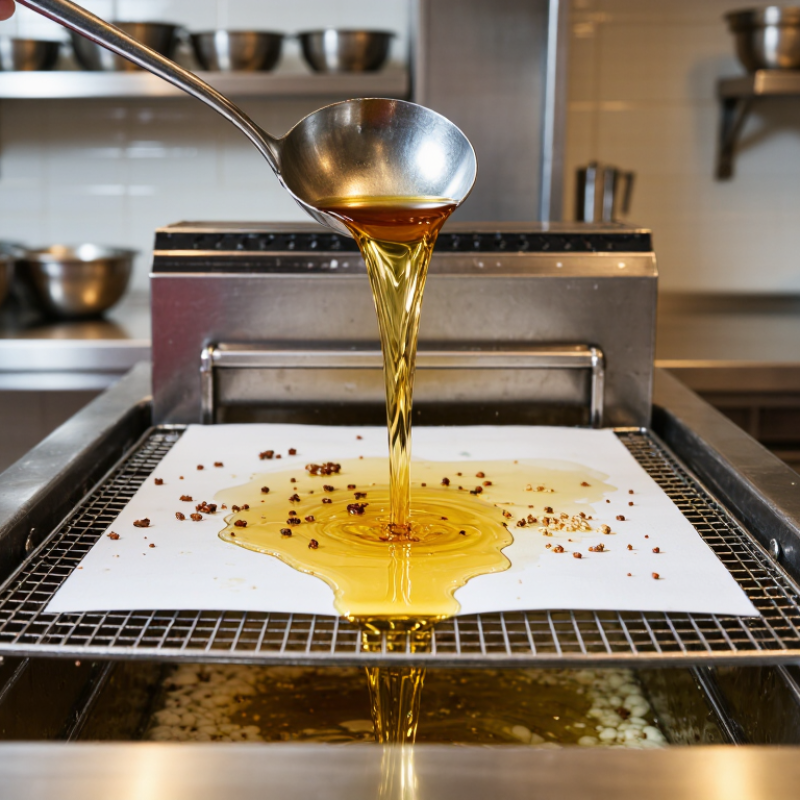
What Is Frying Oil Filter Paper and How Does It Work?

Frying Oil Filter Paper is a simple but important tool in commercial kitchens, food factories, and busy restaurants. It removes crumbs, batter fragments, carbon particles, and other suspended debris from used cooking oil. These small particles may look harmless. They are not.

As frying-oil specialist Michael M. Blumenthal puts it, “Filtration is one of the simplest ways to extend frying-oil life.” His observation reflects a practical truth: clean oil usually performs more consistently than oil filled with burnt residue. When hot oil passes through Frying Oil Filter Paper, the paper acts as a controlled barrier. Oil flows through its pores, while larger solid particles remain trapped in the sheet. The result can be clearer oil, fewer burnt flakes, and more stable frying performance.

The process is not magic. It does not reverse every chemical change caused by overheating, oxidation, or repeated use. That distinction matters. A filter cannot make severely degraded oil safe or fresh again. Temperature control, regular oil testing, proper storage, and timely replacement remain essential.

Picture a fryer after a long service period. Tiny brown crumbs collect at the bottom, and the oil begins to darken. Filtering removes much of that visible waste before it burns again. However, filter paper quality, pore size, flow rate, and operating temperature influence the final result. Choosing the wrong paper may slow filtration or allow fine particles to pass.

This guide explains what Frying Oil Filter Paper is, how it works, and where its practical limits deserve closer attention.

What Is Frying Oil Filter Paper and How Does It Work?

What Is Frying Oil Filter Paper?

Frying oil filter paper is a food-grade porous sheet used to remove crumbs, batter, carbonized particles, and other suspended solids from cooking oil. It is usually made from cellulose fibers, sometimes with a supporting layer for greater strength. The paper does not “clean” oil chemically. Its main job is physical separation.

Hot oil passes through the sheet by gravity or light pumping pressure. Larger particles remain on the surface, while smaller particles become trapped within the fiber network. Cleaner oil then returns to the fryer or storage container. In practical kitchen use, filtering after each busy service can reduce burnt particles that darken oil and create bitter flavors. It cannot remove dissolved oxidation products, water, or excessive free fatty acids.

The Codex Alimentarius Code of Practice for the Storage and Handling of Edible Fats and Oils notes that heat, oxygen, water, and food residues accelerate oil deterioration. A 2022 review in Foods also reported that filtration mainly improves oil clarity and removes solid residues, while temperature control remains essential. Paper quality matters. Weak sheets may tear, and overly fine sheets can slow flow or retain too much usable oil. That part is easy to overlook. Operators should check the oil’s color, odor, foaming, and frying performance, rather than trusting filtration alone. Small tests matter.

How Frying Oil Filter Paper Is Made

What Is Frying Oil Filter Paper and How Does It Work?

How Frying Oil Filter Paper Is Made

Frying oil filter paper usually begins with purified cellulose fibers from plant-based pulp. Some grades also include carefully selected food-contact fibers for added strength. Manufacturers mix these fibers with clean water, then refine them until the texture becomes smooth and consistent. The mixture is spread across a moving mesh screen. Water drains away, leaving a thin fiber layer.

The wet sheet passes through pressing rollers. These rollers remove excess water and improve fiber bonding. Heated cylinders then dry the paper under controlled conditions. Some manufacturers add a small amount of wet-strength material, but the formulation must suit food-contact requirements. The dried sheet may be lightly pressed to control thickness, porosity, and oil flow. It is then cut into rolls, discs, or sheets for different filtration equipment.

Quality testing checks basis weight, wet strength, flow rate, and particle retention. A useful sheet should hold fried crumbs without tearing easily. It should also let warm oil pass steadily, not painfully slowly. In practical kitchen use, pore size matters as much as thickness. Very fine paper can trap more sediment but may clog quickly. I once underestimated how much moisture affects filtration speed. Oil temperature, paper condition, and the amount of debris all change the result. Filter paper removes suspended particles, but it cannot restore oil damaged by oxidation or excessive heating.

How the Filtration Process Works

Frying oil filter paper is a porous sheet designed to separate food particles from used cooking oil. It is commonly placed inside a filter cone, basket, or dedicated holder. The paper allows liquid oil to pass through while trapping crumbs, batter, and burnt fragments.

The filtration process starts with cooling the oil to a safe handling temperature. Very hot oil may weaken the paper and create a burn risk. As oil moves through the sheet, gravity pulls it downward. Some systems use gentle pumping instead. Larger particles remain on the surface, while finer sediment becomes embedded within the paper fibers. The filtered oil usually looks clearer and heats more evenly. However, paper cannot remove every dissolved compound or repair oil damaged by overheating. That distinction matters. I have found that visual clarity can sometimes create false confidence.

Tips:

Choose paper rated for frying oil and match it to the filter holder. Pour slowly to prevent overflow and tearing. Replace the sheet when flow becomes noticeably slow. Never squeeze saturated paper, because trapped debris can return to the oil. Keep a simple record of filtering time, oil color, smell, and frying performance. Smell is useful, but it is not a complete quality test. When oil becomes unusually dark, foamy, smoky, or stale, filtration alone may not be enough. неприятный

Key Factors Affecting Filtration Performance

Frying oil filter paper is a food-grade sheet, usually made from cellulose fibers. It removes crumbs, carbonized batter, and suspended particles from used cooking oil. Filtration performance depends heavily on pore size, paper thickness, permeability, and oil temperature. A finer pore structure captures smaller particles, but it also slows drainage and may clog quickly. In practical kitchens, warmer oil flows more easily because its viscosity falls. However, excessive heat can accelerate oxidation and weaken the paper.

A 2022 review in Food Chemistry reported that repeated heating can increase total polar compounds and polymerized substances, even when visible particles are removed. Clear oil is not always stable oil. AOCS Official Method Cd 19-90 measures peroxide value, while ISO 660 measures acid value; both help assess chemical deterioration beyond simple appearance. Filter papers commonly target particles in the approximate 5–20 micrometer range, but actual performance changes with loading and oil viscosity. This range is useful, not absolute.

Paper selection also matters. A higher basis weight can improve dirt-holding capacity, yet it may reduce flow. Laboratory permeability data may not match a busy fryer with wet crumbs and uneven pouring. Operators should record filtration time, oil temperature, and sediment level during each cycle. One overlooked detail is moisture. Water can cause sudden bubbling and disrupt steady filtration. I have found that slower filtration is sometimes safer, but it is not automatically better. Performance should be judged by particle removal, flow stability, and validated oil-quality testing.

What Is Frying Oil Filter Paper and How Does It Work? - Key Factors Affecting Filtration Performance
Performance Dimension Typical Range or Reference Value Effect on Filtration Performance Practical Considerations
Filter Paper Material Cellulose fiber; sometimes combined with food-contact-safe wet-strength or retention additives The fiber network captures suspended food particles through depth filtration, surface interception, and adsorption. Use paper specifically manufactured for edible-oil filtration and verify that it is suitable for the intended temperature and food-contact application.
Basis Weight Approximately 40–120 g/m² for many disposable filtration papers Higher basis weight generally provides a deeper fiber structure and greater dirt-holding capacity, but may reduce flow rate. Select a heavier grade when the oil contains substantial crumbs or carbonized particles; use a lighter grade when faster throughput is the priority.
Paper Thickness Approximately 0.15–0.60 mm, depending on construction Greater thickness can improve particle-loading capacity and extend service life before clogging. Thickness should be evaluated together with basis weight, permeability, and wet strength rather than used as a standalone quality indicator.
Nominal Particle Retention Common grades are often designed for roughly 5–50 µm particles A finer structure removes smaller suspended particles more effectively, while a coarser structure usually provides higher flow and longer operating time. Choose the retention level according to the target cleanliness of the oil and the particle load. Nominal retention is not the same as absolute retention.
Oil Temperature Many commercial frying oils are filtered around 60–90°C; follow the equipment and paper limits Higher temperature lowers oil viscosity and normally increases flow, but excessive heat can weaken the paper or accelerate oil oxidation. Filter after the oil has cooled to a safe operating range. Do not pour oil at active frying temperature onto paper unless the system is specifically rated for it.
Oil Viscosity Typically decreases substantially as temperature rises; varies by oil type and degradation level High-viscosity oil creates more resistance within the paper and reduces filtration throughput. Maintain a consistent filtration temperature and avoid comparing flow rates measured at different temperatures or with different oil conditions.
Differential Pressure Should remain within the filter holder or equipment specification Pressure drives oil through the fiber network, but excessive pressure can deform the paper, cause bypass, or release trapped particles. Replace or clean the filter when pressure rises noticeably, flow slows sharply, or the paper becomes heavily loaded with solids.
Oil Flow Rate Depends on filter area, viscosity, temperature, and paper permeability; generally decreases during use A higher flow rate improves productivity but can reduce contact time and may allow fine particles to pass through if the paper is overloaded. Use the manufacturer’s equipment rating as the operating limit and avoid forcing oil through a clogged sheet with excessive pumping pressure.
Solids Loading Varies with food type, frying time, breading, batter, and cleaning frequency Accumulated crumbs form a filter cake that may initially improve fine-particle capture but eventually restricts flow and increases pressure. Remove large crumbs before filtration when possible and change the paper before the accumulated cake causes bypass or unacceptable throughput loss.
Moisture Content Should be minimized before filtration Water in hot oil can cause dangerous splattering, accelerate oil degradation, and reduce the stability of cellulose-based paper. Keep wet food residue and wash water away from the filtration process. Ensure the filter, housing, and oil-contact surfaces are dry.
Wet Strength Must be sufficient for the intended oil temperature, residence time, and pressure Adequate wet strength prevents tearing, collapse, and fiber release while the paper is saturated with oil. Inspect the sheet before use and stop operation if tearing, edge separation, or visible paper migration occurs.
Filter Area Larger area lowers the loading per unit area at the same batch volume Increasing filter area generally raises total capacity and reduces the pressure drop needed to maintain a given flow rate. Size the filter according to oil volume, expected solids load, target filtration time, and the available holder or machine dimensions.
Oil Condition Affected by oxidation, polymerization, free fatty acids, and thermal history Filtration removes suspended solids but does not remove all dissolved degradation products or reverse chemical oxidation. Use filtration as part of an oil-management program that also includes temperature control, cooking-time management, and regular oil-quality checks.
Filter Replacement Point Determined by pressure rise, reduced flow, visible loading, or a defined batch limit Continuing to use an overloaded filter increases resistance and may reduce filtration consistency or cause particle bypass. Establish a replacement rule based on operating data rather than waiting for complete blockage or paper failure.
Note: The ranges shown are general reference values for food-oil filtration. Actual performance depends on paper construction, filter geometry, oil type, temperature, solids concentration, pressure, and equipment design. Always follow the applicable food-contact, safety, and equipment requirements.

Common Uses, Benefits, and Limitations

Frying oil filter paper is a porous sheet designed to remove crumbs, batter particles, and other suspended debris from cooking oil. As oil passes through the paper, solid particles remain trapped in its fibers. The filtered oil can then return to the fryer or storage container. This simple process helps reduce burnt flavors and keeps food surfaces cleaner.

Common Uses, Benefits, and Limitations

Commercial kitchens often use filter paper after frying breaded foods, seafood, vegetables, or potatoes. Home cooks may also use it when oil is reused carefully. Cleaner oil can support more consistent color, flavor, and texture. It may also reduce sediment that accelerates further burning. Not a miracle cure. Filtering cannot remove dissolved odors, water, or chemical changes caused by overheating. It cannot restore oil that has become dark, sticky, or unpleasant.

Tips: Let the oil cool to a safe handling temperature, but do not wait until heavy residue hardens. Use paper rated for hot cooking oil and follow the equipment instructions. Pour slowly to prevent overflow and improve filtration. Replace the paper when flow becomes very slow. Check the oil by smell, color, foaming, and smoking behavior. These checks are useful, but imperfect. When quality seems doubtful, discarding the oil is the safer practical choice.

What Is Frying Oil Filter Paper and How Does It Work?

Frying oil filter paper is a porous, food-contact filtration sheet used to remove crumbs, carbonized particles, and sediment from used cooking oil. The oil passes through the paper by gravity or low pressure, while larger solid particles are trapped in the paper fibers.

The values show representative particle sizes that each method can retain, measured in micrometres (µm). Smaller values indicate finer filtration. Frying-oil filter paper generally removes finer sediment than a coarse strainer or cheesecloth, helping reduce burnt particles and improve oil clarity. However, it cannot remove dissolved odors, moisture, or all chemical degradation products, and filtration should be performed after the oil has cooled to a safe handling temperature.

"*" indicates required fields