Top Uses of Steel and Aluminum in Modern Industries?
Steel and aluminum are pivotal materials in modern industries, driving innovation and efficiency. Their unique properties make them ideal for various applications, shaping everything from construction to automotive design. The versatility of steel and aluminum is unmatched; they are lightweight yet strong, resistant to corrosion, and recyclable.
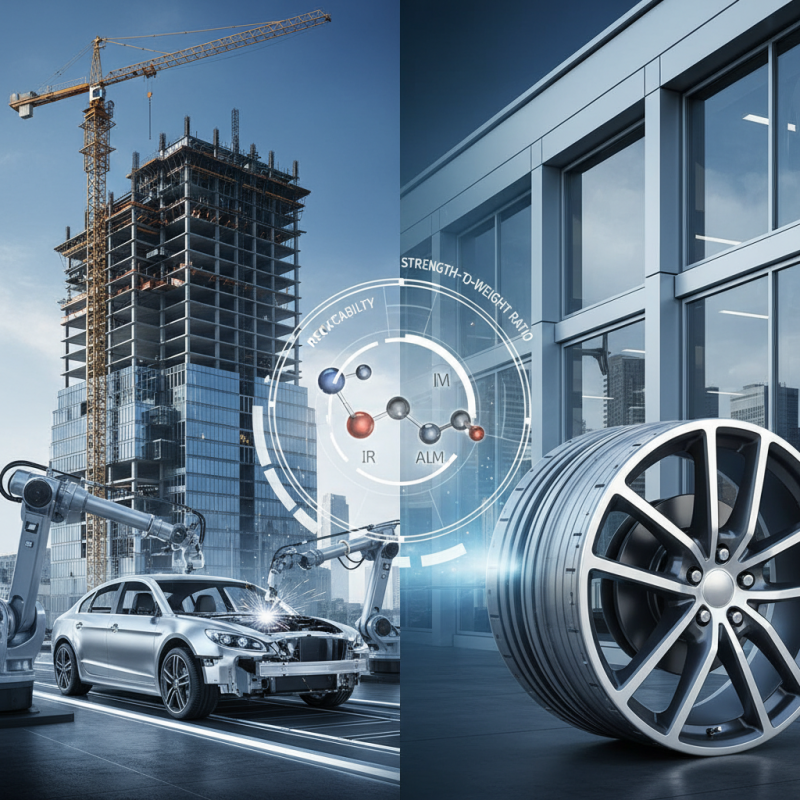
In the construction sector, steel frames provide structural integrity, enabling skyscrapers to reach new heights. Aluminum, on the other hand, is favored for its aesthetic appeal in facades and windows. In the automotive industry, steel and aluminum are integral for manufacturing lighter vehicles, improving fuel efficiency and reducing emissions. This shift towards sustainable design reflects a growing awareness of environmental impact.
Despite their advantages, challenges exist. Steel can be prone to rust, and aluminum, while lightweight, may not always match steel's strength. Understanding the balance of these materials is key to optimizing their use. Manufacturers often face decisions about which material best suits their needs. Awareness of steel and aluminum's properties can lead to smarter choices for a sustainable future.
Key Properties of Steel and Aluminum That Drive Their Industrial Use
Steel and aluminum stand out in modern industries due to their unique properties. Both materials are revered for their strength, durability, and resistance to corrosion. Steel is often used in construction and manufacturing. Its tensile strength makes it ideal for beams and reinforcements. Conversely, aluminum is lightweight and malleable. This makes it perfect for aerospace applications. Its ability to resist rust adds to its appeal in marine environments.
The lightweight characteristic of aluminum plays a crucial role in transportation. It reduces fuel consumption in vehicles, enhancing efficiency. Steel, while heavier, provides significant structural support. However, its weight can be a disadvantage in some applications. Manufacturers must weigh these factors carefully. The cost-effectiveness of both materials also varies; aluminum can be more expensive yet offers long-term savings through durability.
Technical challenges exist. For instance, joining steel and aluminum requires careful consideration of welding techniques. Not all methods work well with these metals together. Therefore, engineers must innovate to create effective solutions. This ongoing dialogue between material properties and industrial needs helps push boundaries. The quest for advanced applications continues, fostering new developments in industry.
Top Uses of Steel and Aluminum in Modern Industries
The following chart illustrates the percentage distribution of the top uses of steel and aluminum across various modern industries, highlighting their key properties that drive industrial applications.
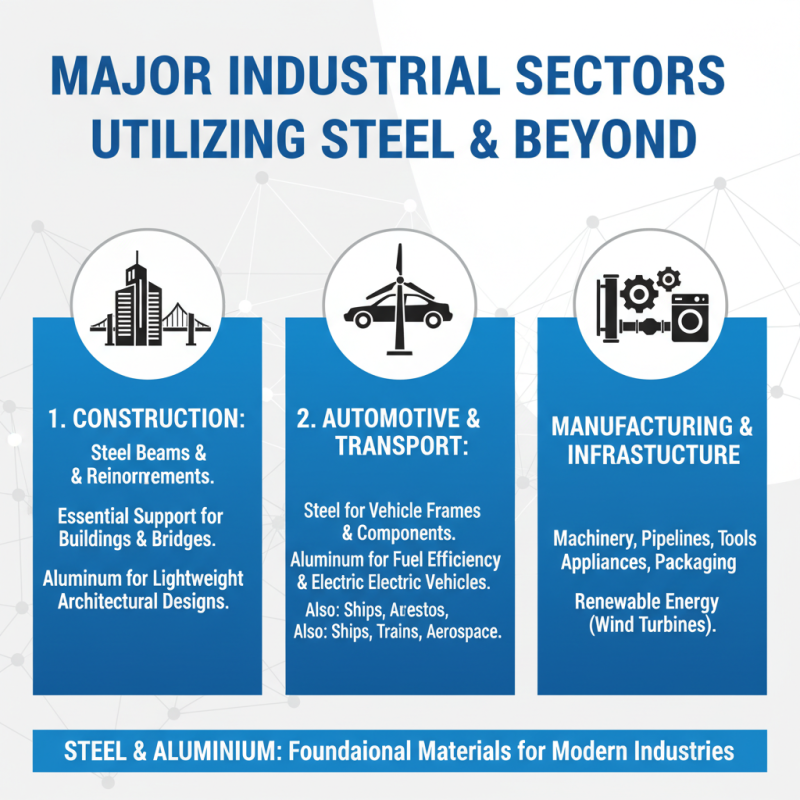
Major Industrial Sectors Utilizing Steel: Construction, Automotive, and Beyond
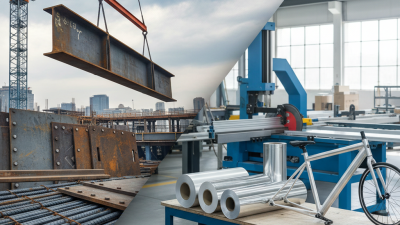
Steel and aluminum are foundational materials in key industries today. In construction, steel beams and reinforcements provide essential support and durability. High-rise buildings and bridges rely on their strength to withstand heavy loads and harsh conditions. Aluminum has also made significant strides, especially in architectural designs where its lightweight properties allow for innovative structures.
The automotive sector uses steel extensively for chassis and bodywork. Steel parts are strong and easy to shape, making them ideal for crucial components. However, a growing trend is the integration of aluminum in vehicles. It helps reduce weight, improving fuel efficiency and performance. Despite its advantages, the transition poses challenges. Not all manufacturers are ready for this shift, as welding and recycling different metals can complicate production processes.
Beyond construction and automotive, steel and aluminum are found in manufacturing and electronics. They are used in machinery, packaging, and electronic casings. The challenge lies in the need for sustainable practices. As industries push toward eco-friendliness, recycling these metals becomes vital. Yet, the technology to efficiently recycle materials is still developing. Balancing innovation with sustainability remains an ongoing debate.
Aluminum Applications in Aviation: Lightweight Solutions for Efficiency
Aluminum plays a crucial role in the aviation industry today. Its lightweight properties significantly improve fuel efficiency. Aircraft manufacturers prioritize aluminum for wings, fuselage, and other key components. This choice reduces overall weight, allowing planes to fly longer distances with less fuel consumption. Engineers love aluminum for its strength-to-weight ratio, which contributes to safety and performance.
Consider the use of aluminum in aircraft interiors as well. Lightweight aluminum sections make for efficient cabin designs. This reduces baggage weight and enhances passenger comfort. Airlines increasingly demand designs that maximize space while minimizing weight. The balance between safety, efficiency, and passenger experience is always in focus.
Tips: When considering materials for aircraft, always assess the trade-offs. Aluminum is not as strong as steel in some applications. Think about how different material choices impact overall design and safety. Innovative combinations of materials can yield exciting possibilities. Collaborating across engineering disciplines can unlock new efficiencies. This constant reflection can lead to better outcomes in aviation design.
Top Uses of Steel and Aluminum in Modern Industries
| Application |
Material |
Industry |
Benefits |
| Aircraft Structure |
Aluminum |
Aerospace |
Lightweight, Corrosion Resistance |
| Automobile Frames |
Steel |
Automotive |
Strength, Durability |
| Packaging Materials |
Aluminum |
Food & Beverage |
Lightweight, Recyclable |
| Bridges and Buildings |
Steel |
Construction |
High Load Bearing Capacity |
| Heat Exchangers |
Aluminum |
Manufacturing |
Thermal Conductivity, Lightweight |
| Medical Equipment |
Steel |
Healthcare |
Sterilization, Strength |
Innovative Uses of Steel in Manufacturing: From Machinery to Packaging
Steel plays a crucial role in modern manufacturing. Its strength and versatility make it ideal for machinery, construction, and packaging. According to the World Steel Association, global steel production reached 1.9 billion metric tons in 2022. This demand reflects how essential steel is for various industries, particularly in creating durable machinery.
In packaging, steel offers protection and recyclability. For instance, over 80% of steel packaging is recycled after use. This process supports sustainability while meeting consumer demands. Aluminum also finds its place here. Both materials enhance product security and shelf life, crucial for food and beverage industries.
However, the reliance on these metals poses challenges. Fluctuations in raw material costs can impact production budgets. Furthermore, the environmental footprint of mining and processing these materials raises concerns. Manufacturers must innovate to balance efficiency and sustainability, striving for a future where materials meet demands without compromising the planet.
The Impact of Steel and Aluminum Recycling on Modern Industries
Steel and aluminum recycling plays a significant role in modern industries. These metals are not just valuable; they are essential for sustainable practices. Recycling reduces the need for raw materials, minimizing environmental impact. For instance, recycling aluminum saves approximately 95% of the energy required to produce new aluminum from ore. This energy conservation is crucial in the fight against climate change.
However, the recycling process is not without challenges. Contamination can occur during collection, leading to lower quality materials. This can undermine the reliability of recycled metals in industrial applications. Moreover, fluctuating market demands can affect recycling rates. Industries must adapt to these changes to enhance the efficiency of their recycling programs.
Despite these hurdles, the benefits far outweigh the drawbacks. Using recycled steel and aluminum fosters a circular economy. A sustainable approach ensures that industries can thrive while conserving the planet’s resources. Embracing recycling not only promotes environmental responsibility but also strengthens economic stability in modern markets.