"*" indicates required fields
Global buyers are paying closer attention to the Vfd 5.5kw segment. Energy costs remain unpredictable, while factories demand stable speed control, compact cabinets, and easier maintenance. A 5.5 kW drive commonly serves pumps, fans, conveyors, compressors, and small process machines. Its real value depends on more than the nameplate rating.
The International Energy Agency reports that electric motor systems consume a significant share of global electricity. Its 2023 Energy Efficiency Market Report also highlights efficiency improvements as a practical industrial priority. The U.S. Department of Energy identifies motor-driven equipment as a major industrial electricity user. These figures explain why buyers increasingly compare inverter efficiency, overload capacity, harmonic performance, and lifecycle support.
Paul Waide, a recognized motor-systems specialist, has stated, “Electric motor systems are responsible for 43–46% of global electricity consumption.” That reminder gives this product category wider importance. A small efficiency difference can become visible across thousands of operating hours.
China remains a major manufacturing base for variable frequency drives. However, the comparison is not perfect. Some suppliers publish detailed test data; others provide attractive specifications with limited verification. Buyers should examine IEC conformity, EMC design, cooling structure, warranty terms, firmware language, and after-sales response.
Price still matters. It should not lead the decision.
This guide reviews leading China Vfd 5.5kw manufacturers for global buyers. It considers production experience, export capability, customization, technical documentation, and field reliability. The shortlist may not suit every project. Application conditions always deserve a second look.
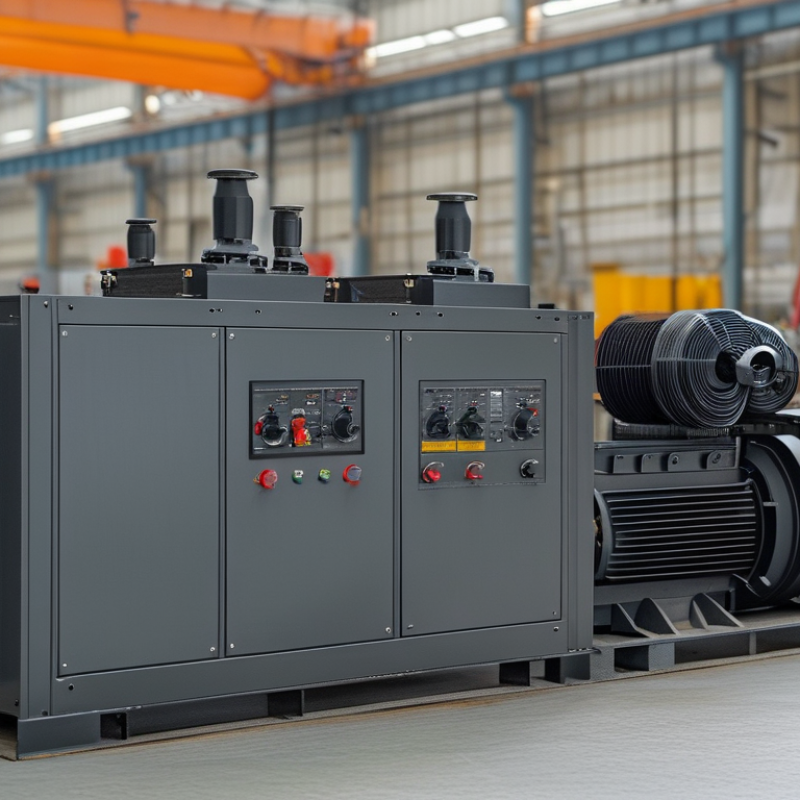
A 5.5 kW variable frequency drive (VFD) controls a motor’s speed by adjusting output frequency and voltage. Its rating equals about 7.5 horsepower under suitable operating conditions. For pumps, fans, conveyors, and compressors, this control can reduce throttling losses and improve process stability.
The reason matters is energy. The International Energy Agency reports that electric motor systems consume roughly 53% of global electricity. The U.S. Department of Energy also estimates that motor-driven systems use about 70% of industrial electricity. A VFD cannot remove every loss, but it can match motor output with real demand. A pump running at half speed may use far less power than one running fully and restricting flow through a valve.
Selection requires practical judgment. Check motor current, overload capacity, enclosure rating, ambient temperature, cable length, and braking needs. The 5.5 kW label alone can mislead. A heavily loaded conveyor may need a larger drive, while a lightly loaded fan may need less capacity. The drive should also support the required control method and local electrical standards.
Field experience shows that poor commissioning can erase expected savings. Incorrect acceleration settings may cause trips, while insufficient cooling can shorten service life. A 2021 U.S. Department of Energy assessment notes that system design and maintenance strongly influence motor efficiency. Buyers comparing Chinese manufacturers should request test records, wiring guidance, fault data, and after-sales support. Specifications matter, but application evidence matters more.
A 5.5 kW variable frequency drive (VFD) controls the speed, torque, and starting performance of a three-phase motor by adjusting its output frequency and voltage. The chart shows the estimated motor-side full-load current at common international voltage levels. Values are calculated using a 5.5 kW output, three-phase power, 0.85 power factor, and 90% efficiency. Actual VFD ratings may vary according to motor efficiency, overload capacity, ambient temperature, and application type.
China Top VFD 5.5kW Manufacturers for Global Buyers?
A 5.5 kW variable frequency drive typically serves motors near 7.5 horsepower. China-made units commonly support V/f control and sensorless vector control. These modes help pumps, fans, conveyors, and compressors start smoothly. Many models accept 380–480 V three-phase input, but voltage ranges differ. Check this.
The International Energy Agency estimates that electric motors consume about half of global electricity. Therefore, adjustable-speed control can reduce throttling losses in suitable applications. Key features include programmable acceleration, deceleration, PID control, and automatic torque compensation. Built-in Modbus RTU is also common for factory monitoring. Some drives provide 150% overload capacity for one minute, though this rating requires careful verification. Cooling fans, conformal coating, and removable terminals can improve maintenance in dusty workshops. These details matter during commissioning.
MarketsandMarkets reported that the global VFD market could grow from approximately USD 24.6 billion in 2023 to USD 31.2 billion by 2028. This growth increases choice, but not every 5.5 kW drive offers equal protection. Buyers should review IEC 61800 compliance, EMC performance, enclosure ratings, harmonic limits, and local certification documents. IP20 suits clean control cabinets; IP55 is more practical near moisture and dust. A weakness remains. Datasheets may omit overload duration, ambient derating, or cable-length limits. Request test records, wiring diagrams, and sample parameter settings before purchase. Check this carefully.
| Specification / Feature | Typical Value for a 5.5 kW VFD | Global Buyer Relevance |
|---|---|---|
| Rated motor power | 5.5 kW, approximately 7.5 hp | Suitable for pumps, fans, conveyors, mixers, compressors, and general-purpose machinery within the drive’s current rating. |
| Input voltage options | Common versions include 200–240 V AC single-phase or three-phase, and 380–480 V AC three-phase | The correct voltage class must match the local electrical supply and motor nameplate. |
| Output configuration | Variable-frequency three-phase AC output; typical maximum output frequency up to 400 Hz, depending on model | Supports adjustable motor speed while maintaining controlled acceleration and deceleration. |
| Typical rated output current | Approximately 11–13 A at 380–480 V; approximately 22–25 A at 200–240 V, subject to the manufacturer’s duty rating | Output current is more important than kW alone when selecting a drive for a specific motor. |
| Control methods | V/f control is standard; sensorless vector control is common on many current models | Sensorless vector control generally provides better low-speed torque and speed regulation than basic V/f control. |
| Overload capacity | Typically 120% of rated current for 60 seconds in normal-duty applications; heavy-duty ratings vary | Heavy-load applications may require a higher-rated VFD even when the motor power is 5.5 kW. |
| Speed regulation | Typically about ±0.5% with open-loop vector control; actual performance depends on setup and motor parameters | Useful for conveyors, material handling, and process equipment requiring stable operating speed. |
| Efficiency and power factor | Drive efficiency commonly exceeds 95% at rated load; input power factor depends on design and operating point | Actual system energy savings depend on motor efficiency, load profile, and operating speed. |
| Acceleration and deceleration | Programmable ramp times, commonly from seconds to several minutes | Reduces mechanical shock and helps limit starting current in pumps, fans, and conveyors. |
| Built-in protection | Overcurrent, overvoltage, undervoltage, overload, overheating, short-circuit, and motor-stall protection are commonly included | Protection functions improve equipment safety, but they do not replace correctly sized upstream breakers and motor protection. |
| Enclosure rating | IP20 is common for control cabinets; higher IP ratings are available in selected product lines | IP20 drives generally require installation inside a suitable electrical enclosure. |
| Communication and I/O | Common interfaces include RS-485 with Modbus RTU, digital inputs, relay outputs, and analog 0–10 V or 4–20 mA inputs | Verify terminal layout, protocol implementation, and supported communication options before integration. |
| Braking functions | DC injection braking is common; dynamic braking resistor compatibility depends on the specific model | External braking hardware may be needed for rapid stopping or high-inertia loads. |
| Operating environment | Typically around -10°C to 40°C without derating; altitude and temperature limits vary by model | Confirm derating requirements for high-temperature, high-altitude, dusty, or humid installations. |
| Applicable standards | Product documentation may reference IEC 61800-5-1, IEC 61800-3, CE, or comparable market requirements | Importers should request current compliance documents for the destination country and application. |
| Common applications | Water pumps, HVAC fans, conveyors, packaging equipment, textile machinery, mixers, and light industrial machinery | Application suitability depends on starting torque, duty cycle, braking demand, ambient conditions, and motor compatibility. |
Note: Values shown are typical market ranges for 5.5 kW variable-frequency drives. Confirm the exact datasheet, rated current, overload class, certifications, and enclosure requirements before purchase.
Comparing China’s leading VFD manufacturers requires more than checking a 5.5kW price. The International Energy Agency’s Energy Efficiency 2023 report states that electric motor systems use around half of global electricity. A reliable drive can therefore influence long-term operating costs, not only purchase cost. Check rated output current, overload capacity, cooling design, and performance at low speed. A 5.5kW unit should match your motor’s voltage, frequency, and duty class. It should also provide clear derating data for hot cabinets and high-altitude sites.
Ask each manufacturer for IEC 61800-5-1 safety evidence, EMC test records, and production quality certificates. Do not accept a generic certificate alone. Request the exact model and test scope. Compare input harmonic behavior, braking options, protection functions, and control methods such as sensorless vector control. The U.S. Department of Energy notes that variable-speed control can reduce energy use in variable-torque applications, especially pumps and fans. The saving depends heavily on the load profile.
Field experience matters. Test sample units with your actual motor, cable length, and operating cycle. Measure starting current, noise, temperature rise, and fault recovery. Firmware support is often overlooked. That can become expensive later. Compare warranty terms, spare-part availability, manuals, and remote troubleshooting response times.
One weakness remains: published efficiency figures may use different test conditions. Buyers should verify them independently before placing a large order.
A 5.5 kW variable frequency drive (VFD), roughly 7.5 hp, suits machines requiring flexible motor speed. In water treatment plants, it controls pumps for filtration, dosing, and circulation. Lower speed can reduce pressure surges and wasted energy. HVAC systems use it for supply fans, return fans, and cooling-water pumps. Quiet starts matter in occupied buildings. They reduce belt shock and nuisance trips.
On conveyors, the drive provides controlled acceleration for cartons, bags, and light aggregate. A ramp of 5 to 15 seconds can protect gearboxes, although load inertia determines the correct setting. Mixers and small process machines benefit from adjustable speed during blending or feeding. Air compressors require careful control during unloaded starts. A VFD should not be selected by motor power alone. Check rated current, overload duty, input voltage, enclosure rating, ambient temperature, and braking requirements. This is where many purchasing decisions become too simple.
In agricultural pumping, dust, long cable runs, and unstable supply conditions can affect reliability. Installers should confirm grounding, cable shielding, and motor insulation before commissioning. PID control can maintain flow or pressure with less manual adjustment. Harmonic limits may matter in dense industrial panels. A drive can appear correctly sized yet trip when a clogged filter increases torque. That detail is easy to miss. Global buyers should verify local voltage and installation standards. Review the real duty cycle, not only the nameplate. Test under realistic load.
China’s leading 5.5kW VFD manufacturers should be judged beyond price and catalog appearance. Global buyers need stable output, accurate motor control, and dependable thermal performance. A serious supplier can provide factory test records, wiring diagrams, fault histories, and clear inspection procedures. Ask whether each drive is tested under realistic loads, not only on an empty bench. Small details matter, such as terminal labeling, cooling fan access, and enclosure protection.
Certification must match the destination market and installation environment. Request valid certificates, test reports, and applicable EMC documentation before placing an order. Confirm that the certificate covers the exact model and voltage range. Some documents look convincing but explain little. That deserves careful questioning. Check production consistency through sample testing, factory audits, and third-party inspections. No supplier is perfect, so evaluate how openly the team handles defects and corrective actions.
Tips: Compare two or three samples under the same motor load. Test acceleration, braking, noise, temperature, and overload response. Keep written records. Ask for English manuals, remote commissioning, spare-part advice, and response-time commitments. Support after shipment often separates a useful supplier from a cheap one. Also clarify warranty exclusions, software access, and replacement procedures. Never assume fast replies before payment guarantee technical support later.
"*" indicates required fields