"*" indicates required fields

Choosing an Aluminum Lid supplier can influence product safety, filling efficiency, and customer trust. Global buyers often compare price first, yet that approach can hide important risks. Lid thickness, alloy grade, coating performance, and sealing accuracy may differ between seemingly similar products. A dependable supplier should explain these differences clearly.
This guide reviews ten Aluminum Lid suppliers serving international markets. It focuses on practical evidence, including manufacturing experience, quality-control systems, production capacity, export support, and customer feedback. Buyers should examine technical data sheets, sample results, and factory communication before signing a contract. Details matter. A supplier with modern stamping equipment may still struggle with inconsistent lacquer adhesion or delayed corrective action. Physical samples can reveal scratches, burrs, weak seals, and dimensional variation that photographs often miss.
The selected companies are assessed from a buyer’s perspective, not through promotional claims alone. Their ability to support food, beverage, pharmaceutical, or cosmetic packaging should be confirmed according to the intended application and relevant market requirements. Certifications can strengthen confidence, but they do not replace independent verification. No ranking removes every uncertainty. Even experienced buyers may overlook tooling costs, minimum order quantities, or changing freight conditions. That is why this overview combines supplier background with practical purchasing questions. It aims to help importers, distributors, and packaging manufacturers make a more informed shortlist, while recognizing that supplier performance should be tested continuously.
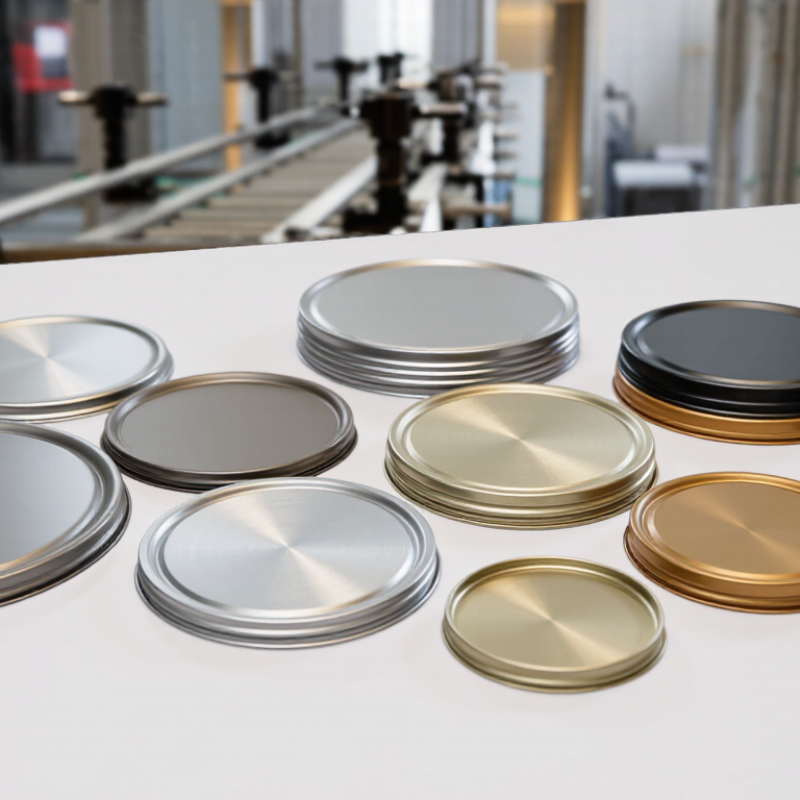
Top 10 Aluminum Lid Suppliers for Global Buyers
Aluminum lid sourcing covers more than standard bottle closures. The market includes screw caps, easy-open ends, peelable foil lids, jar covers, and tamper-evident formats. Each category serves different filling lines and barrier requirements. Grand View Research estimates the global aluminum caps market will expand steadily through 2030, supported by beverages, food, cosmetics, and healthcare packaging. Published estimates differ, however. The market is not perfectly measured.
For global buyers, product scope should start with the application. Beverage ends require precise scoring and reliable opening force. Food lids often need heat resistance, lacquer compatibility, and strong seal performance. Foil seals depend on induction settings, container materials, and liner selection. Small details matter. A lid may look suitable but fail during transport.
Supplier evaluation should include alloy grade, thickness tolerance, coating compliance, and production traceability. Buyers should request migration testing and batch-level inspection records. ISO 9001 certification can support process control, but it does not replace product testing. According to the International Aluminium Institute, aluminum remains highly recyclable when collection systems function effectively. Yet recyclability claims can weaken when coatings, liners, or mixed materials complicate recovery. That point deserves more attention. Smithers’ packaging research also identifies lightweighting and improved barrier performance as continuing industry priorities. Global buyers should compare tooling support, minimum order quantities, regional delivery, and documented quality data before ranking suppliers.
| Rank | Anonymous Supplier Profile | Primary Supply Region | Main Product Categories | Common Aluminum Alloys | Typical Diameter Range | Typical End-Use Markets | Decoration and Finish Options | Common Compliance Requirements | Best Fit for Global Buyers |
|---|---|---|---|---|---|---|---|---|---|
| 1 | Profile A — High-volume closure producer | East Asia | ROPP caps, pilfer-proof caps, bottle closures | 8011, 3003 | 18–43 mm | Spirits, wine, edible oil, pharmaceuticals | Embossing, lithographic printing, matte and gloss coating | Food-contact regulations, ISO 9001, migration testing | Large recurring orders |
| 2 | Profile B — Beverage can-end specialist | Southeast Asia | Easy-open ends, stay-on-tab ends, standard can ends | 3104, 5182 | 52–153 mm | Soft drinks, beer, energy drinks, food cans | Clear or colored coating, scored opening panels, printed tops | Food-contact compliance, dimensional inspection, pressure testing | High-speed filling lines |
| 3 | Profile C — Pharmaceutical and nutraceutical supplier | South Asia | Flip-off seals, tear-off seals, vial and bottle caps | 8011, 3003 | 13–32 mm | Injectables, oral liquids, supplements, diagnostics | Anodized surfaces, printed logos, color-coded coatings | GMP controls, ISO 15378, extractables and leachables testing | Regulated healthcare packaging |
| 4 | Profile D — Premium spirits closure supplier | Western Europe | Decorative bottle caps, wine closures, screw closures | 8011, 3105 | 18–45 mm | Wine, whisky, liqueurs, gourmet beverages | Deep embossing, brushed metal, hot stamping, tactile varnish | Food-contact requirements, recycling declarations, quality traceability | Premium and customized packaging |
| 5 | Profile E — Aerosol and industrial closure producer | North America | Aerosol ends, valve cups, industrial screw caps | 3003, 5052 | 25–76 mm | Personal care, household chemicals, automotive products | Internal lacquer, external coating, printed graphics | Pressure resistance, chemical compatibility, DOT or regional packaging rules | Technical and industrial applications |
| 6 | Profile F — Flexible and small-batch manufacturer | Eastern Europe | Screw caps, snap-on lids, cosmetic jar lids | 8011, 3003, 3105 | 20–100 mm | Cosmetics, specialty foods, craft beverages | Short-run digital printing, embossing, satin and glossy finishes | EU food-contact rules, REACH, packaging-waste requirements | Custom designs and moderate volumes |
| 7 | Profile G — Food-can and specialty lid supplier | Latin America | Easy-open food lids, peelable ends, ring-pull lids | 5182, 3104 | 50–153 mm | Canned seafood, pet food, vegetables, prepared meals | Food-safe internal lacquer, offset printing, scored opening | Food-contact compliance, retort compatibility, seal integrity testing | Processed food packaging |
| 8 | Profile H — Sustainable packaging specialist | Northern Europe | Lightweight closures, recyclable lids, low-carbon packaging formats | 8011, 3105 | 18–110 mm | Beverages, dairy, personal care, household products | Water-based coatings, reduced-ink decoration, recycled-content options | Recyclability assessment, life-cycle documentation, EU packaging rules | Sustainability-focused projects |
| 9 | Profile I — Middle East and Africa export supplier | Middle East | Bottle caps, food lids, beverage closures | 8011, 3003 | 25–99 mm | Water, juices, edible oil, sauces and condiments | Full-color printing, anti-corrosion coatings, embossed designs | Food-contact requirements, heat resistance, export documentation | Regional distribution programs |
| 10 | Profile J — Integrated packaging solutions provider | South America | Custom lids, closure systems, caps with liners and inserts | 8011, 3003, 3105 | 20–120 mm | Food, beverage, cosmetics, pharmaceuticals | Printing, embossing, anodizing, liners, induction-seal inserts | ISO 9001, food-contact testing, seal-performance validation | Multi-category procurement |
Market scope includes aluminum closures and lids for beverage, food, pharmaceutical, cosmetic, aerosol and industrial packaging. Actual alloy selection, dimensions, certifications, minimum order quantities and production capabilities should be verified directly with each supplier before purchase.
"*" indicates required fields