What Are the 2026 Top Aluminum Tube Steel Types for Buyers?
Buying aluminum tube steel in 2026 requires more than choosing a shiny, lightweight section. The phrase itself creates confusion. Some suppliers mean aluminum tubing, while others discuss steel tube alternatives. This guide clarifies that difference before comparing material grades, tempers, and finishes. Buyers need evidence, not attractive photographs. A mill test certificate, dimensional report, and traceable batch number provide a stronger starting point.
For general structural frames, 6061-T6 aluminum tube often offers a practical balance of strength, machinability, and availability. 6063-T5 or T6 suits visible architectural rails, furniture, and clean extrusions. Its surface finish is usually easier to specify. High-strength 7075 tubing can reduce weight, but it may cost more and weld poorly. Steel remains relevant where stiffness, impact resistance, or lower purchase cost matters. Galvanized carbon steel can serve outdoor frames, while stainless grades suit hygienic or corrosive environments. These are not interchangeable choices.
The strongest 2026 option depends on load, climate, joining method, and production volume. Ask for yield strength, wall-thickness tolerance, ovality, temper, and corrosion guidance. Check whether the quoted tube is seamless, welded, drawn, or extruded. Small details matter. A 2-millimeter wall may look adequate but buckle under a long unsupported span. I have seen specifications fail because buyers compared price per meter without comparing alloy, temper, and testing. That mistake deserves attention. This overview therefore compares common aluminum tube steel types by real buying priorities, not marketing language. Some recommendations remain conditional, because reliable engineering rarely fits one universal list.
What Defines Aluminum Tube Steel Types in 2026?
In 2026, “aluminum tube steel types” should be defined by alloy, temper, shape, and production method. Aluminum is not steel, although buyers sometimes use the phrase for structural metal tubing. This distinction affects strength, weight, corrosion resistance, and welding performance.
Common tube choices include 6061-T6 for strong frames, 6063-T5 for smooth architectural profiles, and 3003 for light forming work. The alloy number matters. So does the temper. T6 usually offers higher strength, while softer tempers bend more easily. Round, square, rectangular, and oval tubes serve different load paths. Extruded tubes often provide precise profiles, while welded tubes may reduce cost but require careful seam inspection.
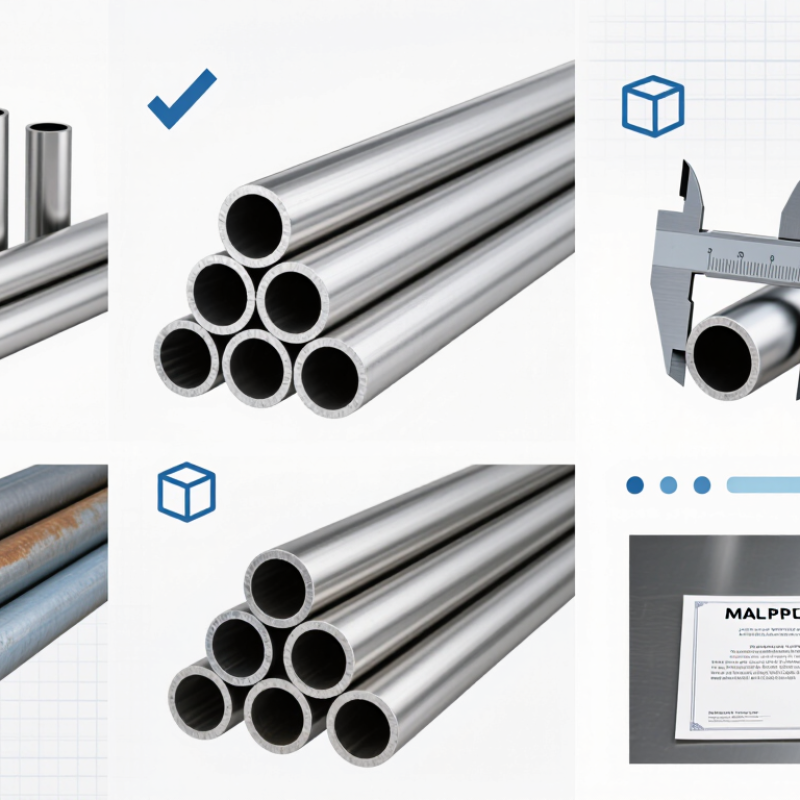
Ask for wall thickness, outside dimensions, straightness, and weight per meter. Small errors matter. A two-millimeter wall may suit a guardrail, but not a heavily loaded machine frame. Check the stated standard, chemical composition, mechanical test results, and batch traceability. Certificates should match the delivered material, not merely the quotation.
Surface finish also defines practical quality. Anodizing can improve appearance and surface durability, but it does not repair weak design. Powder coating needs proper pretreatment. Aluminum can contact steel safely only with suitable isolation in wet environments. Otherwise, galvanic corrosion may appear around fasteners. This point is often missed. A buyer should also confirm cutting tolerances, weld qualifications, and whether the tube is seamless or welded. Availability can change, so the “best” type is not always the easiest one to source consistently.
Which Aluminum Tube Steel Grades Are Most Widely Used?
Aluminum tube buyers in 2026 will often encounter 6061-T6, 6063-T5, 5052-H32, and 3003-H14. These grades are widely used because they balance strength, formability, corrosion resistance, and cost. The Aluminum Association identifies 6061 and 6063 as major structural and architectural alloys. ASTM B221 and B241 also cover common extruded and seamless tube applications.
6061-T6 suits frames, supports, machinery, and transport components. Its typical tensile strength is about 310 MPa, depending on the product form and supplier data. 6063-T5 offers smoother surfaces and easier extrusion. It appears in handrails, light frames, and decorative profiles. 5052-H32 performs well in marine, chemical, and outdoor environments. It is not usually selected for maximum structural strength. 3003-H14 bends easily and serves heat exchangers, ducts, and general fabrication.
The USGS Mineral Commodity Summaries 2025 reported global aluminum production near 72 million metric tons in 2024. That scale supports stable access to common tube alloys, but availability still varies by region. “Most used” does not mean “best.” This distinction is easy to miss.
Tips: Match the grade to the load, bend radius, and environment. Request mill certificates and verify wall thickness. Do not compare strength values without checking temper, diameter, and testing standards. A practical trial piece may reveal problems earlier than a spreadsheet.
2026 Top Aluminum Tube Grades for Buyers
Typical minimum tensile and yield strength values for commonly specified aluminum tube alloy tempers
6061-T6 is widely selected for structural tubing because of its high strength. 6063-T5 is commonly used for architectural and general-purpose extrusions because of its finish and formability. 5052-H32 and 3003-H14 are frequently chosen for corrosion-resistant, formed tube applications, while 2024-T3 provides high strength for specialized aerospace-related uses. Values are representative reference figures in MPa; actual tube properties vary by product standard, wall thickness, manufacturing method, and temper.
How Do Aluminum Tube Shapes and Manufacturing Methods Differ?
For 2026 buyers, aluminum tube selection starts with shape, not price. Round tubes distribute pressure evenly and suit handrails, fluid lines, and lightweight frames. Square tubes provide cleaner joints and better resistance to twisting. Rectangular tubes offer efficient strength when one direction carries heavier loads. Oval and custom profiles can reduce drag or fit tight spaces, but they usually require more specialized tooling.
Manufacturing methods change the tube’s performance. Extrusion pushes heated aluminum through a shaped die, creating consistent profiles at high volume. It works well for round, square, rectangular, and custom sections. Drawn tubes pass through a die after extrusion, improving wall accuracy and surface quality. This method often suits telescoping parts and close-fit assemblies. Welded tubes form from aluminum strip, then join along a seam. They can reduce cost, yet the weld area may need careful inspection.
Alloy and temper matter too. A softer grade bends more easily, while a heat-treated grade generally supports higher structural loads. Buyers should check wall thickness, straightness, ovality, weld quality, and corrosion exposure. A perfect-looking tube can still fail a fit test. That happens more often than expected. One practical mistake is choosing the strongest alloy before confirming forming requirements. The better decision balances shape, manufacturing route, tolerances, cutting needs, and actual service conditions. Drawing quality reports and sample measurements can reveal weaknesses before full production.
What Factors Guide the Best Aluminum Tube Steel Selection?
For 2026 aluminum tube buyers, alloy selection should follow service conditions, not popularity. Common choices include 6061-T6, 6063-T5, 5052-H32, and 3003-H14. Each behaves differently under load, bending, welding, and corrosion exposure. The International Aluminium Institute reported approximately 72.9 million metric tons of global primary aluminum production in 2024. That scale supports stable supply, but it does not guarantee the right tube for every project.
Strength is only one decision point. Choose 6061-T6 for structural frames, machinery supports, and higher-load applications. Select 6063-T5 when surface finish, extrusion detail, and appearance matter. In coastal or chemical environments, 5052-H32 often offers better corrosion resistance and forming performance. The USGS Mineral Commodity Summaries identifies alloying, energy costs, and recycled material availability as major influences on aluminum markets. Buyers should request mill certificates, temper details, dimensional tolerances, and confirmed wall thicknesses.
Weldability matters.
A tube may meet a strength target but fail near a welded joint. Designers should check post-weld performance, fatigue exposure, and thermal expansion. ASTM dimensional and material requirements can improve purchasing consistency. Recycled content also deserves attention. The U.S. Department of Energy reports that recycling aluminum uses about 95% less energy than producing primary metal. However, recycled content alone does not prove suitability. I have seen specifications focus heavily on price while overlooking ovality, internal burrs, and actual delivery tolerances. That oversight can create assembly problems later. Temper, finish, cut length, and inspection frequency should be agreed before ordering.
What Are the 2026 Top Aluminum Tube Steel Types for Buyers? — What Factors Guide the Best Aluminum Tube Steel Selection?
| Aluminum Tube Type |
Common Tube Tempers |
Typical Density
(g/cm³) |
Typical Tensile Strength
(MPa) |
Typical Yield Strength
(MPa) |
Typical Elongation
(%) |
Corrosion Resistance |
Weldability |
Machinability |
Best-Fit Applications |
Key Buyer Considerations |
| 6061 |
T6, T651, T4 |
2.70 |
約 290–310 |
約 240–276 |
8–12 |
Good |
Good; strength may decrease in the heat-affected zone |
Good |
Structural frames, machinery, transport components, hydraulic and pneumatic tubing |
A strong, versatile general-purpose choice. Specify post-weld strength requirements because welding locally reduces the T6 temper. |
| 6063 |
T5, T6 |
2.69 |
約 185–241 |
約 145–214 |
8–12 |
Very good |
Good |
Fair to good |
Architectural tubing, handrails, furniture, display systems, light-duty frames |
Offers excellent extrusion quality and surface finish. Choose it for appearance and formability when very high structural strength is not required. |
| 6005A |
T5, T6 |
2.70 |
約 255–290 |
約 215–255 |
8–10 |
Good |
Good |
Good |
Vehicle structures, platforms, ladders, scaffolding and medium-duty extruded profiles |
Provides a useful balance between strength and extrusion capability. Confirm the applicable regional standard because designation and availability can vary. |
| 5052 |
H32, H34, O |
2.68 |
約 210–260 |
約 145–195 |
10–25 |
Excellent, especially in marine environments |
Excellent |
Fair |
Marine tubing, fuel and chemical-service lines, tanks, enclosures and formed components |
A strong option where corrosion resistance and forming are more important than maximum machinability or heat-treatable strength. |
| 3003 |
O, H14, H18 |
2.73 |
約 145–200 |
約 40–185 |
2–25 |
Very good |
Excellent |
Fair |
Heat-exchanger tubing, HVAC parts, general-purpose tubes, food-service and low-pressure applications |
Cost-effective and highly formable. It is generally unsuitable when high structural strength or high-pressure performance is required. |
| 2024 |
T3, T351 |
2.78 |
約 400–470 |
約 245–325 |
8–18 |
Fair to poor without protection |
Poor; fusion welding is generally difficult |
Good |
Aerospace-style lightweight structures and highly loaded machined components |
Selected for high strength-to-weight performance. Use protective treatment and engineering review where moisture, galvanic contact or welding is involved. |
| 7075 |
T6, T651 |
2.81 |
約 500–570 |
約 430–505 |
5–11 |
Fair |
Poor; not normally chosen for conventional fusion welding |
Good |
High-strength lightweight frames, tooling, aerospace-related and performance equipment components |
One of the highest-strength commonly used aluminum alloys, but it has lower corrosion and welding performance. Verify stress-corrosion requirements and temper. |
How buyers should select aluminum tubing:
Compare alloy and temper together with tube shape, outside diameter, wall thickness, dimensional tolerances, required pressure rating, joining method, operating temperature, corrosion exposure, surface treatment, fatigue loading, minimum order quantity and applicable standard. Mechanical values above are representative ranges for common wrought products and can change with product form, wall thickness, temper and governing specification. Aluminum tubing is not steel tubing; the correct material designation should be confirmed before ordering. Common reference frameworks include ASTM B210 for seamless tube, ASTM B241 for seamless pipe and seamless extruded tube, ASTM B221 for extruded shapes and tube, and EN 755 for extruded aluminum products.