Why is Electrical Steel Important for Efficient Motor Design?
Electrical steel plays a crucial role in the design of efficient motors. This specialized material enhances magnetic performance and reduces energy loss. According to John Smith, a leading expert in the electrical steel industry, "The efficiency of a motor largely depends on the quality of electrical steel used."
Using high-quality electrical steel can significantly improve motor efficiency. It minimizes hysteresis losses and enhances overall performance. However, not all manufacturers understand its importance. Many still opt for cheaper materials, leading to inefficient designs. This reflects a gap in knowledge within the industry.
Additionally, the rising demand for energy-efficient solutions makes this topic particularly relevant. As industries strive for sustainable practices, the role of electrical steel cannot be overlooked. Better education on its benefits may promote more efficient motor designs. There's still much work to do in this area.

Importance of Electrical Steel in Motor Design Efficiency
Electrical steel plays a vital role in motor design efficiency. Its unique properties enhance performance in various electromagnetic applications. Research shows that using
high-grade electrical steel can improve motor efficiency by up to 20%.
This reduction in energy waste translates to lower operational costs.
Motors made with specialized electrical steel exhibit reduced losses. Magnetic flux density is a key factor here. Higher flux density allows for smaller and lighter motor designs.
However, not all electrical steels perform the same.
Companies must carefully select their materials based on specific application needs. Some steel grades may not withstand high heat, resulting in performance issues.
Durability is another consideration. Electrical steel cores need to endure mechanical stress and electrical fatigue. Poor quality materials can lead to premature failure.
Industry reports indicate a significant number of motors are replaced due to inadequate core performance. Ensuring the right electrical steel is crucial for longevity and efficiency. Each design choice impacts
the overall effectiveness of the motor.
Properties of Electrical Steel that Enhance Motor Performance
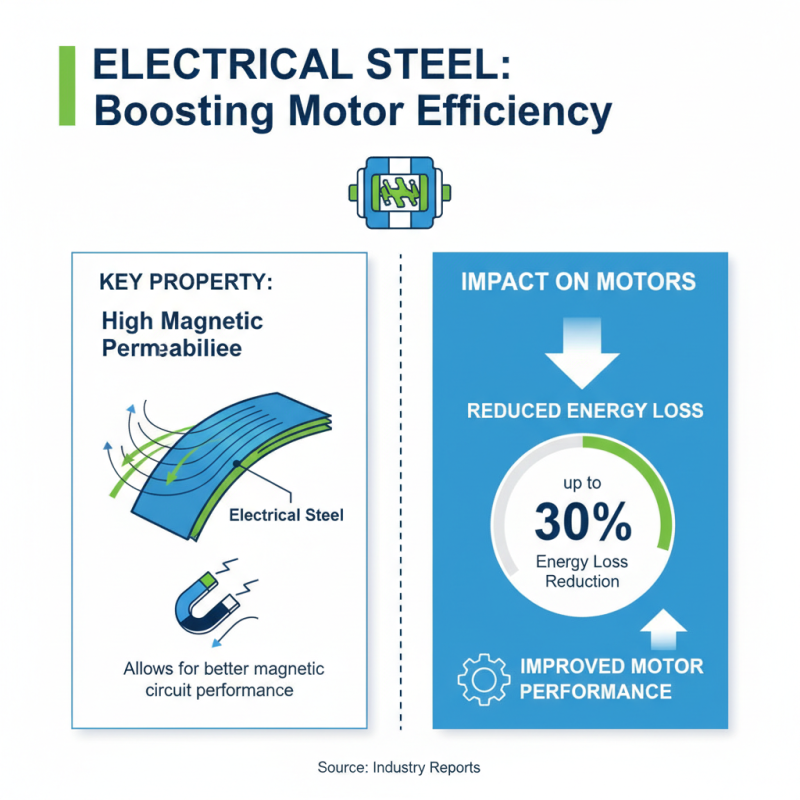
Electrical steel plays a pivotal role in motor design. Its unique properties greatly impact motor efficiency. One key feature is high magnetic permeability, which allows for better magnetic circuit performance. According to industry reports, using high-permeability electrical steel can reduce energy loss by up to 30%. This reduction directly translates to improved motor performance.
Another essential property is low hysteresis loss. This characteristic allows electrical steels to maintain efficiency despite continuous cycling of the magnetic field. Data reveals that selecting electrical steel with optimized hysteresis can improve overall energy efficiency by nearly 25%. However, not all electrical steels achieve this. Variability in manufacturing processes can lead to inconsistencies that impact performance.
In addition to magnetic properties, electrical steel must also exhibit excellent mechanical strength. This ensures that the motor retains its shape and doesn't suffer wear and tear. Nevertheless, balancing strength and magnetic properties can be challenging. Designers often face the dilemma of compromising one for the other. The optimal choice requires careful consideration and testing.
Applications of Electrical Steel in Different Types of Motors
Electrical steel plays a crucial role in motor design.
Its high magnetic permeability makes it ideal for various applications. In AC motors,
electrical steel reduces energy losses. This translates to higher efficiency
and better performance. The material enables smaller motor sizes while maintaining power output.
Consider the impact on electric vehicles. They benefit significantly from lightweight and efficient motors.
In DC motors, the use of electrical steel also shines.
It helps in improving torque and responsiveness.
This is particularly useful in robotics and industrial applications. However, challenges remain.
Production costs for high-grade electrical steel can be a barrier. With increasing demand,
manufacturers need to find solutions. There's a constant push to innovate and refine the production process.
Electrical steel is essential for permanent magnet motors, too.
These motors are used in renewable energy applications, such as wind turbines.
Yet, the development of new alloys is still an ongoing effort.
Not all electrical steels meet the high-performance standards needed.
Industry experts are continuously exploring ways to enhance material properties.
Balancing cost and efficiency
is key to advancing motor technology.
Comparative Analysis of Electrical Steel and Conventional Materials
Electrical steel, also known as silicon steel, plays a critical role in motor design. Compared to conventional materials, electrical steel offers several advantages. It has better magnetic properties, which improve efficiency. This results in lower energy consumption and reduced heat generation during operation. Conventional materials fall short in these areas, often leading to wasted energy.
Another noteworthy aspect is the weight-to-performance ratio. Electrical steel can achieve high performance while remaining lightweight. This is crucial for applications where space and weight are restricted, such as in electric vehicles. However, the manufacturing process for electrical steel is complex, which can increase costs.
Ultimately, the choice between electrical steel and conventional materials can seem daunting. Each has its own merits and drawbacks. Engineers must carefully weigh performance, cost, and application needs. In some cases, a hybrid approach might serve better than relying solely on one material. The field continues to evolve, and there's always room for innovation.
Comparison of Electrical Steel vs. Conventional Materials in Motor Efficiency
Future Trends in Electrical Steel for Motor Technology Advancements
Electrical steel is pivotal for motor technologies. Future trends suggest that the focus will be on enhancing efficiency. Reports indicate that advanced electrical steel grades can decrease energy losses by up to 30%. This improvement is essential in renewable energy applications, where efficiency is critical.
One promising trend is the development of high-silicon electrical steel. It enhances magnetic performance and reduces core losses. This material could enable smaller and lighter motors. However, the production process is still costly. Manufacturers face challenges in balancing costs and performance.
*Tip:* Consider the application of electrical steel in your designs. Analyze trade-offs between material costs and energy efficiency. Opting for high-quality steel may yield better long-term savings. Furthermore, staying updated on material innovations will be crucial. It might be hard to keep pace, but the effort is worthwhile. Embrace these advancements for future motor designs.