"*" indicates required fields
As solar installations expand, the question “What Is the Best DC Surge Protection Device from China?” deserves more than a low-price comparison. IEA PVPS reported that global photovoltaic capacity exceeded 1.6 terawatts by the end of 2023. Every string inverter, combiner box, and rooftop cable increases the importance of reliable DC protection. A failed device can leave charred terminals, damaged modules, or an idle inverter after one nearby lightning event.
The right Surge Protection Dc product should match the system voltage, discharge current, grounding design, and installation environment. IEC 61643-31 provides requirements for surge protective devices used on photovoltaic DC systems. UL 1449 remains important where North American certification is required. Market research reports, including MarketsandMarkets’ Surge Protection Devices Market analysis, also identify renewable-energy infrastructure as a major demand area. These reports offer useful direction, but they cannot replace product testing.
Chinese manufacturers now supply compact Type 2 and combined Type 1+2 devices, often with remote signaling, thermal disconnects, and replaceable modules. Look closely at Ucpv, In, Imax, Up, short-circuit ratings, and certification evidence. A polished datasheet is not proof of field reliability. Factory audits, sample testing, traceable materials, and clear warranty terms matter more than impressive claims. This is where buyers sometimes make mistakes. The cheapest unit may meet a headline specification but fail under heat, humidity, or repeated impulses. The best choice is therefore application-specific, independently verified, and supported by a manufacturer willing to answer difficult technical questions.
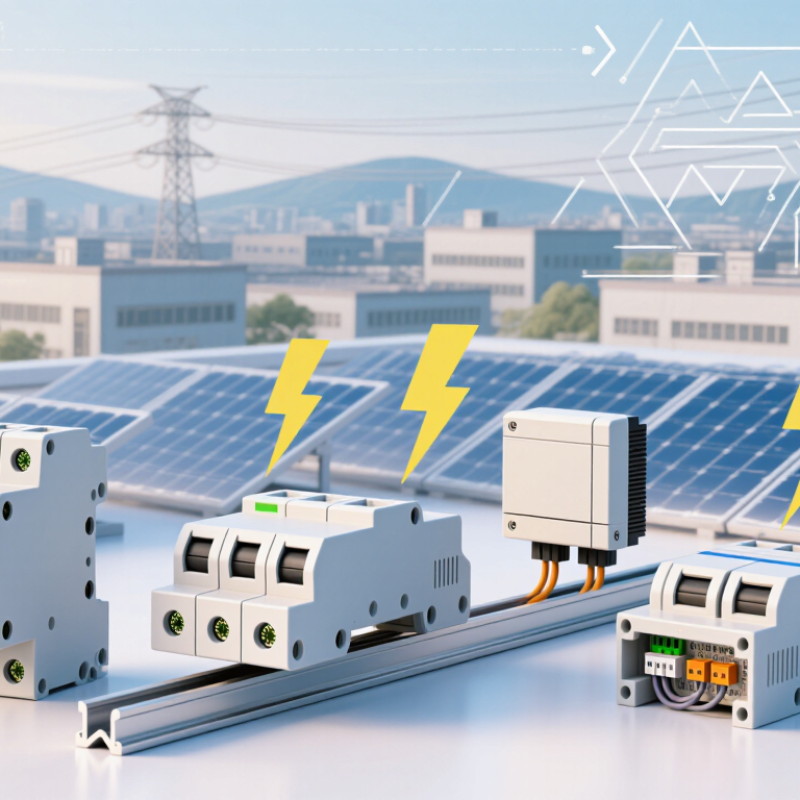
What Is the Best DC Surge Protection Device from China?
DC surge protection devices protect solar strings, batteries, and control circuits from short, high-energy voltage spikes. The IEA PVPS Trends in Photovoltaic Applications 2024 report recorded about 456 GW of new photovoltaic capacity in 2023. That expansion increases the need for dependable DC protection. A practical device usually uses a metal-oxide varistor. During a transient, it clamps excessive voltage and diverts surge current toward the grounding system. Thermal disconnection helps prevent overheating after repeated stress. It does not stop sustained overvoltage or repair poor earthing.
Types matter. Type 1 devices handle partial lightning current near exposed installations. Type 2 devices manage induced surges inside distribution systems. Combined Type 1+2 units serve locations requiring both functions. For photovoltaic systems, verify compliance with IEC 61643-31. Check Ucpv, maximum discharge current, short-circuit rating, response indication, and replaceable modules. A low price alone proves little. In field inspections, mismatched voltage ratings remain an easy mistake, especially when cold-weather open-circuit voltage is ignored. The “best” Chinese device should provide traceable test reports, stable production records, and clear installation instructions.
Tips: Compare the device voltage with the array’s highest cold-weather voltage. Keep DC cable runs short and separated. Inspect indicators after storms. Ask for independent laboratory evidence, not only a factory datasheet. Protection can fail quietly.
What Is the Best DC Surge Protection Device from China?
The best device is not defined by price or appearance. It must match the system’s voltage, current, and fault conditions. For photovoltaic applications, verify the maximum continuous operating voltage, discharge current, voltage protection level, and short-circuit rating. A mismatch can leave panels exposed during a nearby lightning event.
Ask for independent test reports, production records, and traceable component information. Check whether the device follows applicable IEC requirements for DC surge protection. Confirm its thermal disconnect, visual status indicator, enclosure rating, and replacement method. For outdoor installations, IP protection, humidity resistance, and temperature performance matter greatly. A product may pass a laboratory test yet perform poorly after careless assembly or storage.
Tips: Request samples before bulk purchasing. Test them with your actual cable length and grounding arrangement. Review factory quality controls, incoming inspection, and final testing records. Ask how failed units are analyzed. That answer can reveal more than a sales brochure. Also, inspect the marking carefully: polarity, wiring terminals, Uc value, and installation direction should be clear. Field experience shows that many failures come from incorrect selection or loose connections, not only from the device itself. I would still avoid relying on certificates alone; documents can become outdated, and real installation conditions are often less tidy than laboratory setups.
Choosing the best DC surge protection device from China requires more than comparing price. Voltage rating is the first filter. The device’s maximum continuous operating voltage must exceed the system’s normal DC voltage, including charging variation. IEC 61643-11:2011+A1:2018 evaluates SPDs with standardized 1.2/50 μs voltage and 8/20 μs current impulses. A 600 V system may need a higher-rated device, especially where photovoltaic voltage rises during cold mornings. That detail is easy to miss.
Discharge capacity shows how much surge current the protector can handle. In technical datasheets, I look for nominal discharge current, In, and maximum discharge current, Imax, under the 8/20 μs waveform. A 20 kA rating can suit many distribution applications, but exposed rooftop equipment may require a stronger coordination design. The rating alone is not enough. Short connecting wires matter. IEC guidance and field testing both show that installation inductance can increase the residual voltage at the protected equipment.
Response time is also important, but manufacturers sometimes present it too simply. Metal-oxide varistor protection commonly responds within nanoseconds, while spark-gap designs may operate more slowly but carry larger impulses. The clamping voltage must be checked at the actual test current, not only at a small laboratory current. NEMA SPD application guidance recommends coordination between upstream and downstream protection. I would also request independent test records, thermal stability data, and repeated-surge results. One weakness remains: published figures may not represent dusty cabinets, loose terminals, or aging components. Evaluate the complete installation, not just the fastest number.
Comparison of representative DC surge protection device specifications by maximum continuous operating voltage, nominal discharge current, and response time.
Higher discharge capacity generally indicates stronger surge-handling capability, while a lower response time enables faster clamping of transient overvoltage. The values shown are representative industry specifications for commonly available DC SPD configurations and should be verified against the final product datasheet, system voltage, grounding arrangement, and applicable standards.
What Is the Best DC Surge Protection Device from China?
Safety begins with correct electrical ratings, not attractive packaging. IEC 61643-31 covers surge protective devices for photovoltaic DC systems. It evaluates discharge performance, thermal stability, and failure behavior. For a 600-volt solar string, check Ucpv above the maximum operating voltage. Also verify In, Imax, and short-circuit withstand capacity. A device with a high peak-current number may still be unsuitable for continuous DC stress.
Material quality matters at the component level. Reliable units commonly use stable metal-oxide varistors, heat-resistant housings, and independent thermal disconnectors. Enclosures should resist moisture and ultraviolet exposure. Look for clear creepage distances, tight terminals, and an IP rating suited to the installation. The National Weather Service reports that lightning causes over 1 billion dollars in annual property damage in the United States. That figure explains the risk, but it does not justify buying the largest rating blindly.
Manufacturing evidence is more useful than factory claims. Request batch records, component traceability, impulse-current test results, and production-line inspection data. IEC 61643-31 testing should be performed on the finished assembly, not only on individual varistors. Independent laboratory reports add credibility. Yet even laboratory testing has limits. Field wiring, grounding resistance, and cable length can reduce real protection. A well-made Chinese DC SPD can perform strongly, but certification marks alone cannot replace installation experience and periodic inspection. One missed connection can defeat an expensive device.
Selecting the best DC surge protection device depends on the power system, not the country of manufacture alone. A photovoltaic array needs a device designed for continuous DC voltage, outdoor exposure, and repeated lightning events.
Check the maximum continuous operating voltage, discharge current, short-circuit rating, and polarity before comparing prices. A device rated too low may fail during normal operation.
Battery energy storage requires a different approach.
Battery strings can deliver extremely high fault currents, so the protector must coordinate with fuses, disconnectors, and the battery management system. For telecom or control circuits, low residual voltage and fast response may matter more than a very high discharge rating.
Always match the device to the system voltage, cable length, grounding method, and expected surge environment.
A field inspection should include terminal tightness, enclosure sealing, thermal behavior, and replacement access.
I have seen technically suitable devices installed in cramped boxes, where heat and poor wiring reduced their value.
Paper specifications are not enough. Request test reports, traceable production records, wiring diagrams, and clear installation instructions from the supplier.
Independent testing under recognized standards adds confidence, but it does not replace correct selection.
No protector is perfect. A lower-cost option may be reasonable for a sheltered control panel, yet risky beside a rooftop array.
Review the design again when the application changes.
"*" indicates required fields