"*" indicates required fields
The 2026 market for Cereal Bars Making Machines offers options for startups and established food producers. The right line can shape product consistency, output, and operating costs. A compact setup may suit a small workshop, while larger facilities often need continuous forming, cooling, cutting, and packaging. The details matter: bar dimensions, sticky ingredients, cleaning access, and available floor space can all affect equipment choice.
Buyers should compare more than advertised speed. Ask how each machine handles your actual recipe, including nuts, fruit pieces, syrups, and changes in moisture. Review the forming method, temperature controls, changeover time, and access to replacement parts. If possible, request a product trial using your ingredients. Watch closely. Does the slab hold its shape? Are cuts even? Is cleanup practical between batches? These checks make a sales comparison more useful than a specification sheet alone.
A named expert quotation cannot be responsibly supplied without a verifiable source, so this introduction does not invent one. Instead, it frames a sound purchasing principle: “Choose a machine around the product you need to make, not a speed claim you may never use.” Treat that as editorial guidance, not a quotation from a real expert. The sections ahead examine machine types, key specifications, supplier questions, and buying considerations for 2026. A small caveat: production figures can vary with recipes, operators, and line configuration. That deserves a closer look.
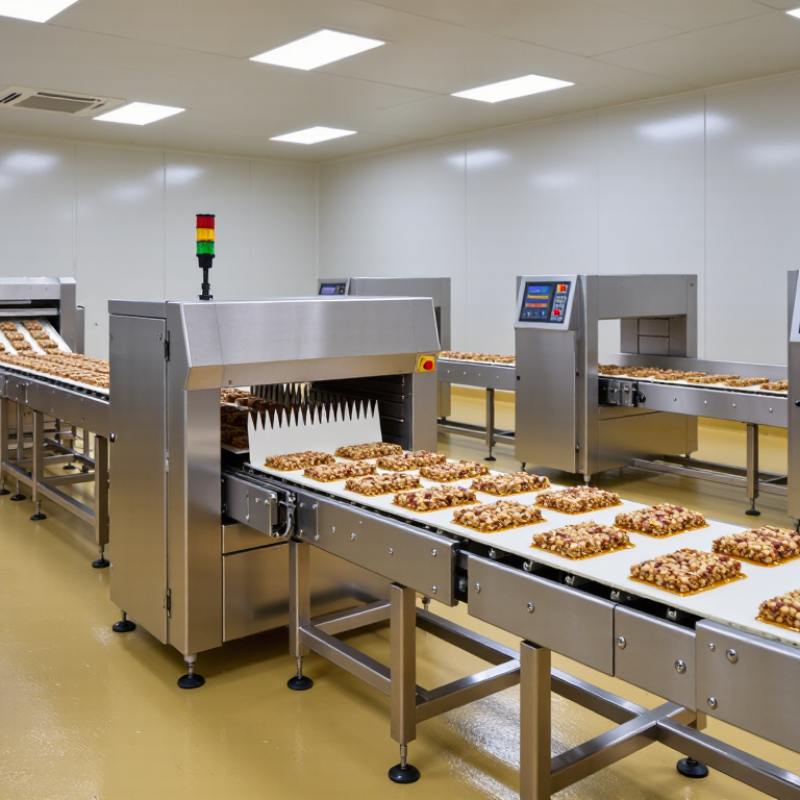
What Is a Cereal Bar Making Machine?
A cereal bar making machine is a group of processing equipment that turns prepared grains and binders into consistent bars. Depending on the recipe and production scale, the line may mix ingredients, form a slab or individual portions, cool the product, and cut it to size. Some setups also wrap finished bars. The goal is controlled production, not just speed.
For example, a mixer combines oats, crisped rice, syrup, and inclusions such as dried fruit. A forming unit presses the mixture to a set thickness, while a cutter creates evenly sized bars. Cooling helps the pieces hold their shape before handling. In practice, sticky recipes can cling to rollers or produce uneven edges. Operators may need to adjust temperature, pressure, or feed rate; the right settings depend on the ingredients.
Tips: Match machine capacity to your expected output and recipe. Check whether contact surfaces are easy to clean, and ask how quickly settings can be changed between batches. Test a sample recipe before choosing equipment. Small details matter. A bar that looks uniform on the line may still crumble after cooling, so inspect finished pieces rather than relying only on machine specifications.
| Machine Type | Typical Production Capacity | Suitable Operation | Key Functions | Common Product Formats | Considerations When Buying |
|---|---|---|---|---|---|
| Manual or tabletop bar former | Small batches; capacity varies by operator and product | Product development, pilot runs, and small-scale production | Hand feeding, pressing, cutting, or simple forming | Small rectangular bars and experimental recipes | Check forming consistency, cleaning requirements, and whether the machine can handle sticky or inclusions-rich mixtures. |
| Semi-automatic forming line | Low to medium output; depends on feed rate and operator input | Start-up businesses and growing production facilities | Metered feeding, sheet forming, roller compression, and cutting | Uniform sheets cut into bars or squares | Confirm product-width adjustment, cutter options, food-contact materials, and integration with upstream mixing equipment. |
| Continuous slab-forming line | Medium to high output; line speed and slab width determine capacity | Regular commercial production | Continuous feeding, leveling, compression, cooling, and longitudinal cutting | Flat cereal, granola, and nutrition bars | Assess available floor space, cooling time, recipe behavior, changeover needs, and the line’s stated output under comparable conditions. |
| Extrusion-based bar line | Medium to high output; product and die configuration affect capacity | Products suited to controlled extrusion and portioning | Conveying or extrusion, shaping, portioning, and cutting | Bars, ropes, and selected shaped products | Verify that the feed system and forming method suit the recipe; some mixtures may require slab forming instead of extrusion. |
| Integrated automated production line | High output; depends on the complete line configuration | Large-scale, repeat production | Automated feeding, forming, cooling, cutting, transfer, and optional wrapping | Consistent bars in multiple sizes and packaging formats | Review controls, changeover time, maintenance access, safety features, utility requirements, and compatibility with packaging equipment. |
| Enrobing and finishing line | Varies by coating width, line speed, and cooling capacity | Producers adding coatings or decorative finishes | Chocolate or compound coating, cooling, and optional topping application | Coated cereal bars and finished snack bars | Check temperature control, coating recovery, cooling capacity, and whether the product can withstand handling during finishing. |
| What is a cereal bar making machine? | Not applicable | Food manufacturers and product developers | A machine or connected line that forms cereal mixtures into bars through processes such as feeding, compression, shaping, cooling, and cutting. | Cereal bars, granola bars, and other formed snack bars | Select equipment based on the recipe, target output, bar dimensions, available space, cleaning procedures, and required downstream packaging. |
A cereal bar production line turns measured ingredients into uniform bars through a sequence of controlled steps. The process usually begins with weighing grains, dried fruit, seeds, and binders such as syrup. Accurate weighing matters. Small differences can change the bar’s texture or make it difficult to cut.
A mixer combines the ingredients until the binder coats the grains. The mixture then moves to a forming section, where rollers or a press create a continuous sheet at a set thickness. A cooling tunnel helps the sheet firm up before a cutter divides it into individual bars. Depending on the recipe, bars may receive a coating or decoration before packaging. Operators should monitor temperature, belt speed, and sheet thickness during production. A line can run smoothly and still produce brittle edges if cooling is uneven.
Tips: Test a small batch before setting full production speed. Check that the cut bars hold together after cooling, not just while warm. Keep ingredient measurements and machine settings recorded for each recipe. These records help identify changes between batches. Still, recipes do not always behave as expected; fruit moisture and syrup temperature can shift the result, so practical testing remains important.
A cereal bar line typically meters and mixes ingredients, forms and cuts the mixture, then cools and packages the bars. The chart shows an illustrative 30-minute batch workflow, not a standard machine specification: actual stage times depend on the recipe, equipment, batch size and operating conditions.
Which Types of Cereal Bar Machines Are Available for Sale in 2026?
Cereal bar machines for sale in 2026 range from compact forming units to integrated production lines. A slab-forming line mixes ingredients, spreads the mass into a continuous sheet, then cools and cuts it into bars. This setup suits recipes with oats, crisped grains, nuts, or dried fruit. Watch how evenly the mixture spreads: a patchy sheet can produce bars with inconsistent weight. Small details matter.
Extrusion machines push a prepared mixture through a shaped opening, creating a continuous bar or rope for cutting. They can suit softer, cohesive recipes, but very chunky inclusions may need careful testing. Some suppliers also offer cutting and guillotine units for operations that already have a mixer or forming stage. These can reduce the need to replace an entire setup.
For larger output, integrated lines may combine mixing, forming, cooling, cutting, and optional chocolate enrobing or wrapping. Not every factory needs every stage. Compare the machine’s demonstrated speed using a recipe close to yours, not just its advertised maximum. Ask about changeover time, cleaning access, and spare-part availability. I would also request sample bars from a production trial; equipment specifications alone can leave questions unanswered. A machine that performs well with one recipe may behave differently with another.
When comparing cereal bar making machines, start with the product, not the advertised output. A 2024 Grand View Research report estimated the global cereal bars market at about USD 15.3 billion in 2023 and projected growth through 2030. That demand makes capacity relevant, but rated bars per minute can mislead. Ask suppliers to run your actual recipe, including sticky syrups, inclusions, and the thickest bar size. Watch for uneven slabs, edge waste, and jams during cutting. Small defects add up.
Compare forming accuracy, changeover time, and cleanability. Check whether the line adjusts quickly between bar widths and thicknesses, and whether operators can access rollers and cutters without awkward disassembly. Important. Confirm the machine’s food-contact materials and cleaning procedure in writing. A polished specification sheet may still miss a practical issue: your oat mixture could cling to a roller after a long production run. Request a sustained trial, not just a short demonstration.
Review controls, guarding, and service support alongside purchase price. Ask for documented output under stated conditions, power use, spare-parts lead times, and operator training details. The 2024 PMMI report, Automation in Food and Beverage, discusses growing automation investment in food production; it is a useful reminder to assess how equipment fits the wider line. Check synchronization with cooling, wrapping, and inspection equipment. Leave room for maintenance access. A faster former cannot compensate for a downstream wrapper that keeps stopping.
Choosing a cereal bar machine starts with the recipe, not the advertised hourly output. A sticky honey-and-syrup mix behaves differently from a dry, nut-heavy blend. Ask suppliers to test your actual ingredients and target bar dimensions. Watch for uneven edges, crumbling, and product sticking to rollers. Small defects can become costly at scale.
Match the line’s capacity to realistic demand, including setup, cleaning, and changeovers. A machine rated for high output may not suit a business making several flavors in short runs. Check whether operators can adjust thickness, cutting length, and compression without lengthy stops. Test the controls yourself. They should be clear, not merely impressive in a demonstration.
Consider the full installation: mixer, forming unit, cutter, cooling space, and packaging equipment must work together. Measure the factory floor, doorways, and available electrical supply before ordering. Ask about spare parts, operator training, and response times for service. Request a written estimate covering installation and routine maintenance, not just the purchase price. One point is easy to miss: a faster line can create more bars than your packaging team can handle. A production trial may reveal that mismatch, though trial conditions rarely capture every busy shift.
"*" indicates required fields