2026 Best Aluminum Pipe Types for Global Buyers
Global buyers are entering 2026 with stronger demand for lightweight, corrosion-resistant piping. The aluminum pipe market reflects this shift across construction, transportation, irrigation, process equipment, and renewable energy projects. The International Aluminium Institute reports that global primary aluminum production exceeded 70 million metric tonnes in 2023. Its long-term outlook also indicates that aluminum demand could rise by approximately 80% by 2050. That pressure will influence availability, alloy selection, recycled content, and delivery planning.
Not every aluminum pipe suits every project. Extruded pipe usually offers efficient production and consistent dimensions. Seamless pipe can support applications requiring improved pressure integrity. Welded pipe may provide a practical option for larger diameters and controlled budgets. Common alloys include 6061 for strength, 6063 for finish and formability, and 5083 for marine exposure. The right choice depends on wall thickness, operating temperature, joining method, and required certification. It is easy to oversimplify this decision.
The Aluminum Association’s published alloy and temper standards remain useful references for North American buyers. European purchasers may also compare EN 755 and EN 10204 documentation, while other regions may require different conformity records. Market research from Grand View Research and Fortune Business Insights identifies infrastructure, automotive, and industrial applications as important aluminum demand drivers. However, their market definitions differ, so reported values are not perfectly comparable. This guide examines the best aluminum pipe types for global buyers in 2026, with attention to performance, sourcing risk, inspection details, sustainability claims, and total delivered cost. A lower unit price is not always a lower project cost.
Aluminum Pipe Basics: Structure, Grades, and Common Applications
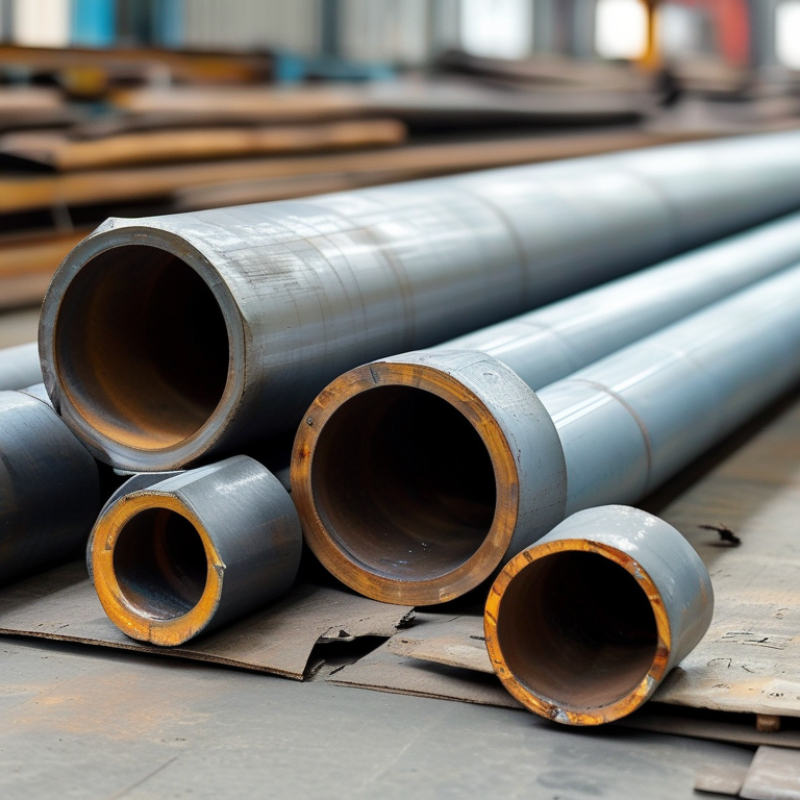
Aluminum pipes are hollow profiles made for controlled flow, structural support, or lightweight framing. Most are produced by extrusion, which pushes heated billet through a shaped die. Seamless pipes offer a uniform body, while welded pipes use formed sheet with a joined seam. Wall thickness, outside diameter, and temper strongly affect performance. A shiny surface does not prove quality.
Common grades include 6061 for strength, 6063 for smooth profiles, and 5083 for strong corrosion resistance. Grade selection should match the working environment, load, and fabrication method. Temper also matters. A heat-treated pipe may perform very differently from a softer version of the same alloy. Applications include handrails, heat exchangers, irrigation systems, transport frames, and industrial air lines. However, aluminum is not ideal for every fluid or temperature. Compatibility checks are essential.
Tips: Ask for the alloy, temper, dimensions, tolerance, and test documents before purchasing. Check whether the pipe is seamless or welded. Review corrosion exposure, pressure, and connection methods with an experienced engineer. Small dimensional errors can cause serious assembly problems. I once underestimated wall thickness during a frame review; the design looked efficient but felt too flexible. That mistake reminded me that low weight should never replace practical testing. Sampling, visual inspection, and independent measurement provide more reliable decisions than a catalog description.
2026 Best Aluminum Pipe Types for Global Buyers
Aluminum Pipe Basics: Structure, Grades, and Common Applications
The chart compares representative minimum ultimate tensile strength values for commonly used aluminum tube and pipe alloys. Actual values can vary by product form, wall thickness, temper, and applicable standard.
6063-T5 is widely selected for lightweight architectural and general-purpose extrusions. 6061-T6 provides a strong balance of strength, machinability, and corrosion resistance for structural tubing. 5086-H32 and 5083-H116 are commonly considered for marine, chemical, and welded applications because of their strong corrosion resistance.
Main Aluminum Pipe Types by Shape, Alloy, and Manufacturing Method
2026 Best Aluminum Pipe Types for Global Buyers
Main Aluminum Pipe Types by Shape, Alloy, and Manufacturing Method
Aluminum pipes usually come in round, square, rectangular, and oval shapes. Round pipes suit fluid transfer, frames, and compressed-air systems. Square and rectangular profiles provide flat mounting surfaces for structures and machinery. Oval pipes can reduce drag, but their forming costs may be higher. The alloy also matters. 6061-T6 offers useful strength and machinability. 6063 is easier to extrude and often gives a smoother appearance. 5052 resists marine corrosion well, although it is not always the best choice for high-strength frames. Check the exact temper, not only the alloy number.
Manufacturing method changes performance and cost. Extruded pipe supports consistent profiles and long production runs. Drawn pipe usually provides tighter dimensions and smoother internal surfaces. Welded pipe may reduce cost, but the seam needs careful inspection. I have seen buyers compare wall thickness while ignoring ovality and end squareness. That mistake can create poor fittings and uneven loads. A clean specification can still fail in service.
Tips: Confirm the required pressure, temperature, and joining method before ordering. Request mill certificates, dimensional reports, and corrosion data. Measure samples at several points, especially near welded seams. Also check import standards and packaging requirements for the destination market. Small details matter. Yet testing only one sample is imperfect; larger batches may behave differently.
Key Specifications: Dimensions, Tolerances, Strength, and Surface Finish
2026 Best Aluminum Pipe Types for Global Buyers
Global buyers need more than an alloy label. The International Aluminium Institute reported approximately 74 million tonnes of primary aluminium production in 2024. That scale creates wide variation in mill capability, inspection quality, and documentation. Specify outside diameter, wall thickness, length, ovality, and straightness separately. ASTM B241 covers seamless aluminium pipe, while EN 755-8 addresses dimensions and tolerances for extruded tubes.
Tolerance must match the application. Tight dimensions support fittings and automated assembly, but they can increase cost and scrap. In practical inspections, a pipe may meet diameter limits while showing uneven wall thickness. Measure twice. Request mill test reports, batch identification, chemical analysis, and dimensional records. The Aluminum Association’s Aluminum Standards and Data is a useful reference for alloy designations and mechanical requirements.
Strength depends on alloy and temper, not appearance. Common 6061-T6 specifications often show tensile strength near 290 MPa and yield strength near 240 MPa, subject to product form and governing standard. Softer 6063 tempers may machine and finish easily, but they usually provide lower structural strength. Surface requirements also need precise wording. Define roughness, scratches, stains, anodizing thickness, and allowable color variation. ISO 7599 provides guidance for anodized aluminium finishes. A bright surface can hide poor geometry, so visual inspection alone remains an avoidable weakness.
How Global Buyers Select Aluminum Pipes for Different Projects
Global buyers should select aluminum pipes by project conditions, not by alloy labels alone. A chilled-water line may need 6063’s smooth internal finish, while a structural frame often needs 6061’s higher strength. Check pressure, temperature, wall thickness, corrosion exposure, and joining methods before requesting quotations. I have seen buyers compare only price and diameter. That approach often creates costly redesigns.
Standards provide a practical screening tool. Ask suppliers for chemical composition, tensile strength, dimensional tolerances, and hydrostatic or non-destructive test records. Match the order with recognized specifications, such as ASTM, EN, or ISO requirements. For coastal projects, review chloride exposure and surface treatment carefully. Anodizing can improve surface durability, but it does not replace correct alloy selection or drainage design.
Small details matter.
Sustainability is also becoming a procurement factor. The International Energy Agency reports that aluminum production uses roughly 4% of global electricity and creates significant process emissions. The International Aluminium Institute’s 2024 pathway analysis calls for deep sectoral emissions reductions by 2050. Buyers should therefore request recycled-content data, production-origin records, and environmental product documentation. Recycling is not automatically better; traceability and mechanical performance still require verification.
I would not trust a catalog alone. Sample testing remains essential, especially when pipes will face vibration, pressure cycles, or frequent outdoor exposure. A cheaper shipment can become expensive after one weak assumption.
International Standards, Quality Checks, Packaging, and Import Requirements
Global buyers should match aluminum pipe types with the application, not only the lowest quoted price.
Seamless pipe suits pressure service, while welded or extruded tube may fit structural and fluid systems. Confirm the alloy, temper, outside diameter, wall thickness, and length before ordering. International specifications may include ASTM B241, EN 755, or equivalent national standards. Requirements differ by market and end use.
A reliable quality check begins with traceable heat numbers.
Request a mill test certificate, chemical composition, tensile results, and dimensional records. EN 10204 3.1 documentation may support formal inspection needs. Inspect random pieces for dents, scratches, ovality, and wall variation. Hydrostatic testing may be necessary for pressure applications. A certificate is not proof by itself. Independent inspection adds useful confidence, though it increases cost and lead time.
Packaging must protect long pipes from bending, water, and salt air.
Use separators, strong straps, end caps, and moisture-resistant wrapping. Wooden crates should meet applicable ISPM 15 rules. Import documents commonly include the commercial invoice, packing list, origin certificate, HS classification, and transport details. Check local duty, labeling, and conformity requirements before shipment. One practical weakness is often overlooked: suppliers may confirm dimensions but ignore unloading conditions. A narrow port yard or limited forklift capacity can damage perfect material. Review packaging photos and loading plans before dispatch.