"*" indicates required fields
The 2026 search for the best Distributed Power Generation Gearbox suppliers begins with a changing electricity market. IRENA’s Renewable Capacity Statistics 2025 reports 585 GW of renewable capacity added worldwide in 2024. Renewables represented 92.5% of total new power capacity. That expansion is increasing demand for compact, efficient, and serviceable transmission systems.
The equipment is not glamorous. It must survive heat, vibration, dust, fluctuating loads, and limited maintenance access. A gearbox supporting a biomass unit in Southeast Asia faces different stresses from one serving a small wind turbine in Northern Europe. Supplier capability therefore depends on more than rated torque or catalog efficiency. Field experience matters. So do material traceability, lubrication design, sealing quality, and documented failure analysis.
The International Energy Agency’s Electricity 2024 report expects strong electricity demand growth through 2026, supported by industry, cooling, electrification, and data centers. Distributed generation can help meet local demand, but its reliability depends on the smallest mechanical interfaces. That point is easy to underestimate.
This guide evaluates leading suppliers through engineering evidence, application fit, after-sales support, and lifecycle cost. It also considers certifications, testing practices, delivery capability, and replacement-part availability. No supplier is ideal for every project. That is the uncomfortable reality. A low purchase price may become expensive after one unplanned shutdown.
Wind data reinforces this pressure. The Global Wind Energy Council reported more than 117 GW of new wind capacity installed in 2024. As distributed assets multiply, buyers need gearbox partners that understand real operating conditions, not only laboratory specifications.
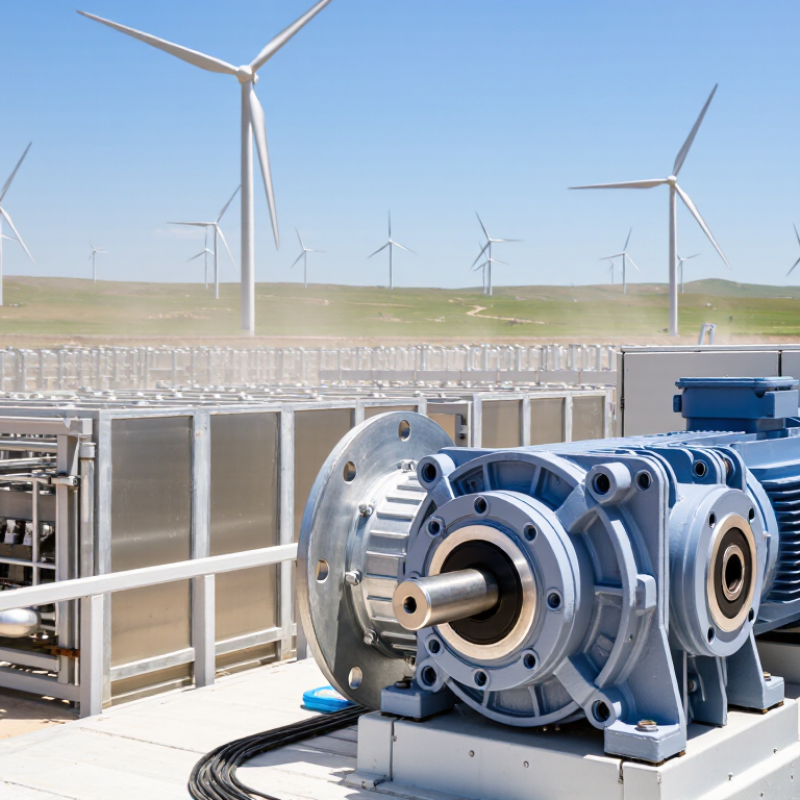
For 1–10 MW distributed generation, gearbox selection depends on duty cycle, not brochure efficiency. These units serve biogas plants, biomass facilities, small wind projects, and industrial microgrids. Each application creates different torque, vibration, and maintenance demands. That range matters.
IRENA’s Renewable Capacity Statistics 2025 reported 4,448 GW of global renewable capacity at the end of 2024. It also recorded 585 GW of new capacity during that year. IEA’s Renewables 2024 report expects nearly 5,500 GW of additional renewable capacity between 2024 and 2030. More distributed assets will require compact, serviceable drivetrains. Suppliers should therefore provide verified load maps, thermal calculations, and documented field experience within the 1–10 MW class.
For practical screening, engineers should check rated torque, peak torque, gearbox ratio, bearing life, oil cooling, and torsional behavior. A 2 MW biogas engine may run steadily, while a 10 MW wind unit can face rapid load changes. NREL’s Cost of Wind Energy Review identifies drivetrain and maintenance costs as important lifetime cost factors. That evidence supports condition monitoring, spare-parts planning, and accessible inspection ports. The field is uneven. Some supplier data still relies on laboratory testing rather than long-term operating records. Buyers should request failure statistics, warranty boundaries, vibration limits, and references from comparable sites. A perfect gearbox does not exist. Conservative sizing may cost more initially, but undersizing can create expensive interruptions.
In distributed power generation, gearbox selection affects efficiency, noise, maintenance, and service life. The IEA Renewables 2024 report recorded about 510 GW of renewable capacity added in 2023. That expansion increases demand for compact and dependable drive systems.
Helical gearboxes suit steady loads in biomass units, small hydro systems, and combined heat-and-power equipment. Their parallel shafts support efficient transmission and relatively quiet operation.
Planetary designs deliver high torque from a compact housing. They fit space-limited generators and variable-load applications, although repair work can become more specialized.
Bevel gearboxes change shaft direction, often by 90 degrees. They help package vertical generators, but alignment and lubrication deserve close attention.
In my view, planetary units are not automatically better. A simpler helical unit may deliver lower lifetime cost in an accessible plant room. That judgment can be uncomfortable, but field conditions matter more than impressive specifications.
Tips: Compare rated torque, peak load, service factor, thermal capacity, backlash, sealing, and spare-parts support. Request test records based on recognized quality systems and applicable IEC rotating-machine requirements. The U.S. Department of Energy’s distributed-generation studies repeatedly emphasize reliability and maintenance access. A supplier’s brochure cannot replace vibration data, oil-analysis history, and a realistic duty cycle. Beware of polished comparisons. They often ignore startup shocks and dusty environments.
Distributed generation is expanding quickly. The International Energy Agency’s Renewables 2024 report recorded 510 gigawatts of renewable capacity additions in 2023. This growth increases demand for compact, efficient, and serviceable gearboxes. Supplier comparisons should begin with evidence, not catalog claims.
ISO 6336 ratings remain central for spur and helical gear evaluation. They address tooth bending strength and contact fatigue under defined loads. A reliable supplier should provide calculation inputs, duty cycles, safety factors, material certificates, and heat-treatment records. The figures must match real operating conditions, including starts, stops, grid disturbances, and torque reversals. A perfect spreadsheet can still describe the wrong machine.
AGMA 6006 provides wind-turbine gearbox guidance, including rating methods, reliability considerations, lubrication, and testing expectations. However, applying it blindly to every distributed-power gearbox creates technical gaps. The standard is especially relevant to wind applications, while engine-driven systems may need additional thermal and torsional analysis. The U.S. Department of Energy’s Land-Based Wind Market Report 2024 shows continued growth in turbine scale, making transient-load verification more important. I would request documented back-to-back testing where practical. It costs more, but field failures cost far more. One weakness remains: many supplier comparisons publish ratings without explaining assumptions. That omission deserves closer review.
Choosing a distributed power generation gearbox supplier requires more than comparing catalog ratings. The 98% efficiency target should be verified at the actual operating load, not only at peak conditions. Request test data for temperature, vibration, torque, and oil losses. Small losses become significant when a unit operates continuously.
A 20-year service life depends on more than strong gears. Ask for fatigue calculations, bearing load margins, sealing design, lubrication intervals, and corrosion protection. Field records are valuable evidence. Inspect how suppliers document failures and corrective actions. I have seen promising projections ignore frequent starts, dusty sites, and uneven loading. Those details can shorten gearbox life.
The 95% availability target also needs a precise definition. Does it include planned maintenance, spare-part delays, and grid interruptions? A credible supplier should provide maintenance schedules, critical-spares data, response times, and service coverage. Review factory inspection records and witness load testing when possible. Availability can look excellent on paper. It may fall quickly when one custom bearing requires a long production lead time. Independent engineering review adds confidence, though it increases evaluation time and cost.
2026 Best Distributed Power Generation Gearbox Suppliers?
Service coverage now matters as much as torque ratings. The IEA’s Renewables 2024 report expects almost 5,500 GW of new renewable capacity by 2030. That growth will pressure gearbox production and field support. Buyers should check technician coverage, spare-part warehouses, and emergency response hours. A local service partner can reduce downtime when a bearing fails during peak demand.
Warranty terms need careful reading. A two-year warranty may exclude alignment errors, contaminated oil, or operation above rated load. Ask for written coverage on gears, seals, bearings, labor, and transport. Also request failure-analysis procedures. DNV’s Energy Transition Outlook 2024 highlights stronger reliability needs as power systems become more distributed. A warranty without practical repair access is weak protection. It looks good on paper.
Tips: Compare confirmed lead times, not quoted lead times. Request production milestones and a shipment buffer. The IEA reports that grid investment must rise sharply this decade, which may increase equipment demand. A twelve-week promise can become eighteen weeks. That happens. Build contingency stock for critical seals and bearings, even when budgets resist it. Supplier scorecards should track response time, repeat failures, documentation quality, and technician availability. Recheck these measures after commissioning, because early assumptions are often wrong.
Comparison of generalized supplier profiles using industry benchmark midpoints for service-network reach, warranty duration, and delivery speed. The index is normalized to 100; higher scores indicate broader service coverage, longer warranty protection, and shorter lead times.
Benchmark basis: global-network profile—40 service countries, 24-month warranty, 12-week lead time; regional-network profile—12 service countries, 18-month warranty, 8-week lead time; specialist profile—6 service countries, 12-month warranty, 6-week lead time. Actual terms should be confirmed in the supplier’s 2026 quotation.
"*" indicates required fields