2026 Best Velcro Abrasive Disc Buying Guide

Choosing the 2026 Best Velcro Abrasive Disc requires more than comparing grit numbers and online prices. The right disc must match the material, tool speed, backing pad, and expected finish. A disc that cuts quickly on pine may clog against aluminum. Another may leave visible swirl marks on painted steel. Small differences matter.

Dr. W. Brian Rowe, author of Principles of Modern Grinding Technology, offers a useful principle: “Grinding performance depends on controlling the process, not merely choosing a harder abrasive.” This idea applies directly to every Velcro Abrasive Disc purchase. Users should examine abrasive grain type, backing strength, hole pattern, heat resistance, and hook-and-loop durability. Ceramic grains often suit demanding stock removal. Aluminum oxide remains practical for general sanding. Mesh discs can reduce dust, but their open structure may feel less aggressive.

This guide considers real workshop conditions. It looks at hand pressure, orbital sander speed, dust extraction, and disc replacement frequency. It also compares performance on wood, metal, plastic, primer, and clear coat. A product may advertise long life, yet poor dust removal can shorten it quickly. That detail is easy to miss.

No buying guide is perfect. Personal technique changes results. A careful buyer should test a small pack before ordering bulk quantities. Check the disc after several passes. Is the edge curling? Is the surface overheating? Does the hook backing still hold firmly? These simple observations reveal more than polished marketing claims. The best Velcro Abrasive Disc is not always the most expensive option. It is the one that delivers consistent cutting, clean removal, and predictable finishing for your specific work.
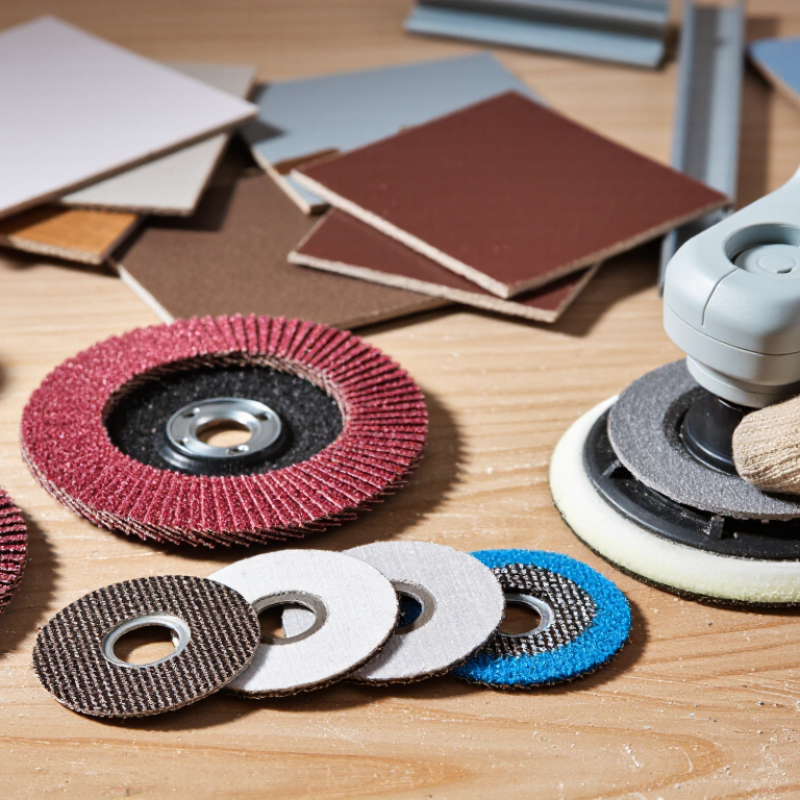
2026 Best Velcro Abrasive Disc Buying Guide

What Are Velcro Abrasive Discs and How Do They Work?

Hook-and-loop abrasive discs are sanding discs with a fabric backing. Their surface uses tiny hooks that press into matching loops on a disc pad. This attachment allows quick grit changes without tools. It also helps the disc sit evenly during orbital sanding. Under rotation, abrasive grains cut paint, wood fibers, filler, or metal oxides. The backing controls flexibility, while the grain controls cutting speed and finish.

Grain size matters. Coarse discs remove material quickly, but they can leave deep scratches. Fine discs create smoother surfaces, although they load faster on soft paint. A 2024 Grand View Research report valued the global coated abrasives market at roughly 9 billion U.S. dollars in 2023. It also identified automotive, woodworking, and metal fabrication as major demand areas. Those figures support the wider use of replaceable sanding systems. Still, market growth does not prove that every disc performs equally.

Check the disc diameter, hole pattern, operating speed, and pad condition before sanding. A worn pad can cause edge lifting or uneven pressure. Dust extraction usually improves visibility and may extend disc life. The U.S. Occupational Safety and Health Administration stresses eye, respiratory, and hearing protection around abrasive work. Practical testing remains important. A disc that works well on hardwood may clog quickly on painted steel. My own buying rule is simple, but imperfect: match the abrasive to the material, then test a small hidden area.

Which Velcro Abrasive Disc Materials and Grits Fit Your Project?

Choosing a Velcro abrasive disc starts with the workpiece, not the disc color. For bare wood, aluminum oxide offers predictable cutting and a controlled finish. It works well on pine, oak, and painted surfaces during sanding and preparation. Zirconia alumina suits tougher jobs, such as removing mill scale or leveling rough metal edges. Ceramic grain cuts aggressively under pressure, but it may be excessive for soft wood. Silicon carbide creates a finer scratch pattern on glass, stone, and some nonferrous surfaces.

Grit determines how much material the disc removes. Coarse grits, from 40 to 80, handle shaping, rust removal, and heavy coatings. Medium grits, from 100 to 180, smooth visible scratches before finishing. Fine grits, from 220 to 400, prepare surfaces for paint or a polished appearance. Do not jump too far between grits. A 120-grit disc cannot always erase deep 60-grit marks efficiently. I have seen users blame the abrasive when excessive pressure caused the problem. Let the disc work, and keep the tool moving.

The hook-and-loop backing should match the sander’s pad size and hole pattern. A mismatched disc can wobble, clog, or leave uneven swirls. Check heat during longer passes, especially on paint and thin metal. My own selection is not perfect every time. Material hardness, dust, and operator technique can change results quickly. Test one disc on a hidden area before treating a full panel. That small test often reveals the better grain and grit.

How to Choose the Right Disc Size, Backing, and Attachment System

When choosing a Velcro abrasive disc, start with the work surface, not the package color. Disc diameter must match the pad and tool rating. Common sizes include 2, 3, 5, and 6 inches. A five-inch disc covers panels efficiently. A two-inch disc reaches narrow corners with better control. Do not force a small disc across a large panel. The 2024 MarketsandMarkets Abrasives Market report estimates growth from about USD 44.7 billion in 2024 to USD 59.4 billion by 2029. That growth reflects demand for faster, more consistent surface preparation.

Backing material changes the disc’s behavior. Paper backing cuts economically on flat wood and light finishing work. Cloth backing tolerates edge pressure, heat, and repeated movement. Film backing stays flatter, which helps when sanding painted surfaces. In practical testing, a flexible backing can follow curves, but it may remove material unevenly. I still prefer a short trial before ordering a full case. Grit alone does not predict performance.

The attachment system deserves equal attention. Check hook shape, loop density, center-hole size, and dust-extraction openings. A disc may fit physically yet release early when the hook-and-loop pattern mismatches. ISO 21948:2020 offers a useful reference for coated abrasive disc dimensions and designation. Inspect the pad, too. Worn hooks reduce holding power and create vibration. Replace damaged pads. Small details matter. A five-minute test on scrap material can reveal loading, heat buildup, edge lifting, and actual disc life more honestly than a catalog claim.

Which Features Affect Velcro Abrasive Disc Performance and Durability?

Velcro Abrasive Disc Buying Guide: Performance and Durability

A Velcro abrasive disc performs best when its backing, hook-and-loop system, and abrasive grain work together. The backing must stay flexible without stretching under pressure. A stiff backing can cut aggressively, but it may leave uneven marks on curved panels. A soft backing follows contours better, yet it can wear faster near sharp edges.

Grain type also matters. Ceramic and alumina-zirconia grains usually remove material faster than standard aluminum oxide. However, faster cutting does not always mean longer service life. Heat, loading, pressure, and workpiece hardness change the result. The U.S. Bureau of Labor Statistics reported that manufacturing remained one of the largest industrial employment sectors in 2023, showing why repeatable abrasive performance matters in production work. Grand View Research estimated the global coated abrasives market at more than 9 billion dollars in 2023, but market size does not prove disc durability. That distinction deserves attention.

Tips: Match disc hardness to the material. Use light, even pressure. Keep the pad flat. Replace a clogged disc early. A clean hook surface improves attachment security. Dust trapped in the hooks can cause lifting, even when the adhesive-looking face seems intact. FEPA guidance emphasizes correct abrasive selection and controlled operating conditions, but real workshops remain less predictable. I have seen operators blame poor grain quality when excessive pressure caused the failure. The buyer should question both the product and the process.

2026 Best Velcro Abrasive Disc Buying Guide - Which Features Affect Velcro Abrasive Disc Performance and Durability?

Feature Common Specification or Range Effect on Performance Effect on Durability and Buying Guidance
Abrasive mineral Aluminum oxide, zirconia alumina, ceramic alumina, or silicon carbide Mineral type controls cutting speed, finish quality, heat generation, and suitability for different materials. Aluminum oxide is economical for general sanding; zirconia and ceramic usually provide higher stock removal on metal; silicon carbide is suitable for fine finishing and hard, brittle surfaces.
Grit size Typically P40–P400 for common preparation and finishing work Coarse grits remove material faster; fine grits produce a smoother surface but remove stock more slowly. Using a grit that is too coarse can cause deep scratches; using a grit that is too fine for heavy removal can cause loading and premature wear.
Backing material Paper, cloth, film, or composite backing Paper is flexible and economical; cloth offers better tear resistance; film provides a flatter, more uniform abrasive surface. For edge work and high pressure, choose a tear-resistant cloth or reinforced backing. For precision finishing, a smooth film backing can improve consistency.
Backing weight Light, medium, or heavy backing grades Heavier backing maintains disc shape under pressure; lighter backing conforms more easily to contours. Select flexible backing for curved surfaces and heavier backing for flat surfaces, aggressive sanding, or repeated use.
Abrasive coating pattern Closed coat, semi-open coat, or open coat Closed coat gives more cutting points; open and semi-open coats leave more space for dust and swarf. For softwood, paint, plastics, and other loading-prone materials, an open or semi-open coat can extend usable life. Closed coat is useful for harder materials and finishing consistency.
Anti-loading treatment Stearate or other non-loading surface treatment, when compatible with the application Reduces clogging caused by paint, filler, coatings, and some soft materials. It can extend cutting life, but it is not suitable for every application. Verify compatibility before sanding surfaces that will receive sensitive coatings.
Hook-and-loop hook density Light, medium, or high hook density Higher effective engagement can improve disc retention during sanding, especially under lateral forces. A strong, evenly distributed attachment reduces disc lifting and edge separation. Excessive heat, dust, or repeated rough removal can reduce hook performance.
Hook-and-loop compatibility Disc and backing pad must use matching hook or loop surfaces Correct matching provides even contact and helps maintain disc balance. A mismatched or worn pad may cause vibration, disc detachment, and premature wear. Replace a backing pad when hooks are flattened, contaminated, or missing.
Disc diameter Common sizes include 75 mm, 125 mm, and 150 mm Larger discs cover more area; smaller discs offer better access to tight or contoured areas. The disc diameter must match the tool and backing pad. Using an oversized disc can create an unsafe overhang and uneven loading.
Hole pattern Non-perforated, 5-hole, 6-hole, 8-hole, or multi-hole patterns More effective dust-extraction openings generally improve visibility and reduce heat and loading when aligned with the pad. The hole pattern must match the backing pad. Misalignment reduces extraction efficiency and may shorten abrasive life.
Maximum operating speed Specified in revolutions per minute by the disc and tool manufacturer Higher speed can increase cutting action, but excessive speed increases heat, vibration, and mechanical stress. Never exceed the lower speed rating of the disc, backing pad, or tool. Inspect discs for damage before operation.
Backing pad hardness Soft, medium, or hard pad Soft pads conform to curves; hard pads provide flatter contact and more direct cutting on flat surfaces. Choose pad hardness together with disc flexibility. An unsuitable combination can cause uneven wear, edge damage, or poor surface control.
Dust extraction compatibility Pad and disc hole layout matched to a vacuum-assisted tool Effective extraction removes abrasive dust, improves visibility, and can reduce disc loading. Use the correct extraction system and keep holes clear. Dust control also reduces contamination of the hook-and-loop attachment.
Workpiece material Wood, paint, filler, plastic, aluminum, steel, stainless steel, or composite Material hardness and heat sensitivity determine mineral type, grit, coating pattern, and pressure requirements. Use separate discs for different materials where cross-contamination could affect the finish or create safety risks.
Operating pressure Light to moderate, even pressure is generally preferred Excessive pressure can reduce disc speed, increase heat, cause loading, and produce an uneven finish. Allow the abrasive mineral to cut rather than forcing the disc. Lower pressure often improves both finish quality and service life.
Heat resistance Depends on mineral, resin bond, backing, speed, pressure, and cooling Lower heat helps preserve abrasive sharpness and reduces discoloration or distortion on heat-sensitive workpieces. Use shorter contact periods, adequate extraction, and suitable pressure when sanding metal, paint, plastic, or other heat-sensitive materials.
Disc flexibility Flexible, semi-flexible, or stiff construction Flexible discs follow contours; stiffer discs maintain a more stable contact area on flat panels. Match flexibility to the workpiece shape to reduce edge digging and localized wear.
Resin bond quality Resin-bonded abrasive grains with varying bond strength The bond controls grain retention, fracture behavior, cutting consistency, and resistance to heat. A well-controlled bond helps prevent excessive grain shedding and premature glazing. Evaluate cutting consistency rather than appearance alone.
Moisture and storage conditions Clean, dry, temperature-stable storage away from direct sunlight Moisture and temperature changes can affect the backing, adhesive, hook-and-loop attachment, and disc flatness. Keep discs flat in their original packaging and avoid damp workshops. Do not use discs with curled edges, delamination, or damaged attachment surfaces.
Quality inspection and safety markings Clear size, grit, material, speed rating, and usage information Accurate identification reduces selection errors and supports consistent process control. Buy discs with traceable specifications and inspect for tears, wrinkles, separation, contamination, or missing hooks before use. Always wear suitable eye, hearing, respiratory, and hand protection.

Note: Actual service life depends on the abrasive material, tool speed, backing-pad condition, contact pressure, dust extraction, operator technique, and storage conditions. Always follow the disc and power-tool manufacturer’s stated limits.

How to Compare Products, Use Them Safely, and Maintain Their Quality

Choosing the best Velcro abrasive disc in 2026 requires more than checking grit numbers. Compare the abrasive material, backing strength, disc diameter, and hook-and-loop connection. A disc should sit flat without lifting at the edges. Match the grit to the task: coarse discs remove material quickly, while fine discs refine the surface. Test one disc on a hidden area first. Small differences matter.

Safe use starts with the tool, not the disc. Check the machine’s speed rating before installation. Inspect the disc for cracks, torn hooks, or uneven wear. Secure the workpiece and keep both hands away from the rotating surface. Wear eye protection and suitable dust control. Avoid pressing too hard. Excess pressure creates heat, damages the backing, and can produce an uneven finish. In my workshop, I once ignored a slightly warped disc. The result looked acceptable at first, but the surface needed extra repair. That mistake still influences my inspections.

Tips: Store discs flat in a cool, dry place. Keep dust away from the hook layer. Do not stack used discs with loose metal debris. Brush the hooks gently, then remove clogged abrasive particles. Replace a disc when cutting performance drops or vibration appears. Record which grit worked best for each material. This simple note saves time later. Still, no checklist is perfect. Pause and reassess when the finish, sound, or vibration changes.

"*" indicates required fields