10 Best Rope Clips for Every Application

Rope clips may look like small hardware, but the wrong choice can slip, corrode, or wear a rope prematurely. A clip used on a garden trellis faces different demands from one used on a boat, a workshop line, or a camping setup. Material, rope diameter, load direction, and exposure to moisture all matter. Small details count.

This guide to the 10 Best Rope Clips for Every Application compares common styles and practical features. It considers grip, ease of adjustment, construction, and the conditions each clip is designed to handle. Stainless steel can suit damp environments, while lighter options may work for low-load indoor tasks. Yet material alone does not prove suitability. Check the maker’s specifications, compatible rope sizes, and stated working limits before choosing.

Think about the actual job. Will the clip stay outdoors through rain and sun? Must it be repositioned often, or remain fixed? A clip that feels secure in your hand may still be unsuitable for a critical load. That distinction is easy to overlook. No single design fits every rope or application, and product descriptions do not always make comparisons simple. The picks ahead aim to clarify those trade-offs, so you can narrow your options with care and match the hardware to the task—not just the price or appearance. For overhead, life-safety, or other high-consequence uses, rely on equipment specifically rated for that purpose and follow the manufacturer’s instructions.
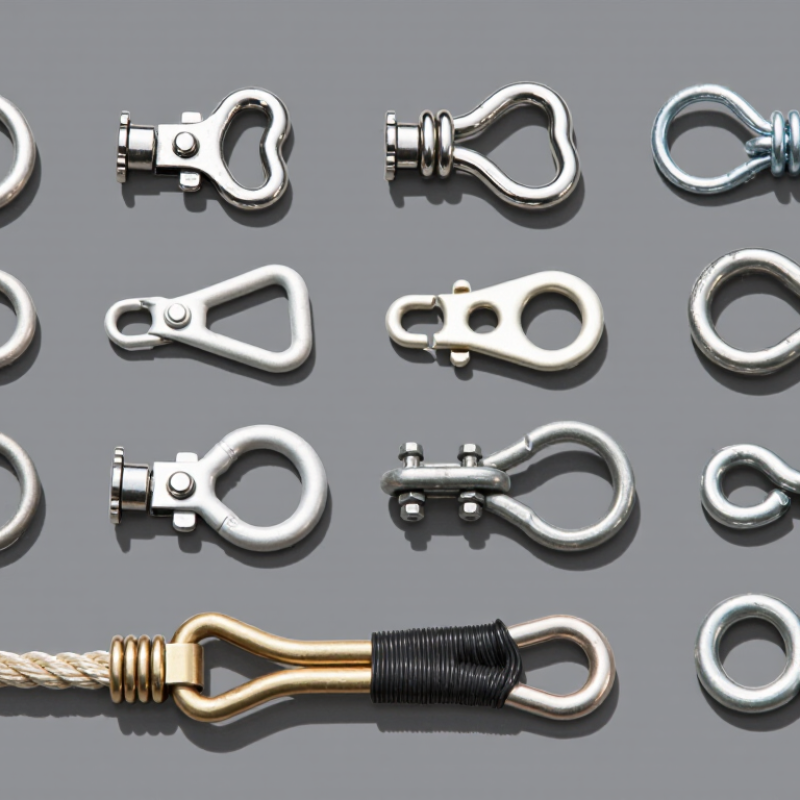
10 Best Rope Clips for Every Application

Understanding Rope Clips and Their Main Functions

Understanding Rope Clips and Their Main Functions

Rope clips secure a rope or wire-rope end, form an eye, or help prevent a tail from slipping. Their job sounds simple. The details matter. A clip must match the rope’s material, diameter, and intended load; a clamp designed for wire rope may damage synthetic fibers. Before fitting one, check the rope maker’s instructions and the clip’s rated capacity. A loose fit can crush fibers, while an undersized clip may not hold.

For wire-rope sling eyes in US construction, OSHA’s 29 CFR 1926.251(c)(5) requires clips to be installed with the U-bolt on the rope’s dead end and the saddle on its live end. That orientation helps avoid crushing the load-bearing strand. The rule also directs users to follow clip-manufacturer recommendations for installation. Inspect the assembly after loading: look for slippage, flattened strands, corrosion, or a loose nut. Replace damaged parts. Do not assume a tight-looking clip is safe; appearance alone tells little about the remaining strength.

ISO 2307 provides a test framework for fiber ropes, measuring properties such as linear density, elongation, and breaking force. These measurements help explain why rope construction matters when choosing a clip. Yet test results do not automatically certify a particular clip-and-rope combination. Real installations vary. Dust, moisture, and repeated bending can change performance, so record the setup and inspect it regularly. A small detail. It can be missed.

Common Rope Clip Types and How They Differ

Rope clips differ by rope material, adjustment method, and the job they must perform. U-bolt wire-rope clips use a saddle and nuts to secure a rope end into a loop. They are common on steel cable, but correct orientation and tightening matter. A misplaced clip can crush strands or let the cable slip. Small details count.

Double-saddle clips press both sides of the cable more evenly than many basic U-bolt designs. They can be useful when a more balanced grip is needed, though installation still depends on cable size and the maker’s instructions.

For synthetic rope, a toothed cam clip grips by pinching the line. It allows quick adjustment, but sharp teeth may damage soft fibers. Smooth-jaw versions are gentler, yet may hold less firmly under some conditions.

Some clips are designed mainly for temporary positioning, while others are rated for lifting or other loaded work. They are not interchangeable. Check the rope diameter, material, load rating, and intended use before choosing. A clip that feels tight by hand may still be unsuitable. I’ve seen that assumption cause trouble. When failure could injure someone, use a rated assembly and have the setup checked by a qualified person.

Key Factors for Choosing a Rope Clip

Key Factors for Choosing a Rope Clip

Choosing a rope clip starts with the rope itself. Check its diameter and construction, then confirm that the clip is designed to fit both. A clip that is too large may slip; one that is too small can crush or fray the fibers. Consider the working load rating, not just the breaking strength. Leave a sensible safety margin, and follow the maker’s instructions for installation and use. For overhead or life-safety work, use only equipment specifically rated for that purpose.

The environment matters, too. Stainless steel can resist corrosion in damp settings, while other materials may suit lighter indoor tasks. Look at the clip’s shape and closure: gloves, cold hands, or frequent adjustments can make a fiddly latch frustrating. Inspect the contact points for sharp edges that could abrade the rope. In practice, small differences show up quickly. Still, choosing a clip from a photo alone can be misleading; fit may need checking with the actual rope.

Tips: Test the connection under a controlled, light load before regular use. Check for movement, damaged strands, rust, or a loose fastener. Replace worn parts promptly. A quick check helps, but it cannot make an unsuitable clip safe.

10 Best Rope Clips for Different Applications

Rope clips work best when matched to the rope, setting, and expected load. A spring snap clip suits light garden lines and quick, frequent connections. A screw-gate clip helps prevent accidental opening on a gear loop. For dock lines, a corrosion-resistant marine clip handles damp air better, though it still needs rinsing. A swivel clip reduces twisting on dog leads or utility tethers. Check that the clip size fits the rope without pinching it.

For outdoor shelters, a small carabiner-style clip makes tarp adjustments quick. A pulley-style rope clip can redirect light lines, but it is not a substitute for rated lifting hardware. A cam cleat holds an adjustable line on a small boat or awning. A quick link forms a more permanent connection for workshop or storage use. A rope thimble clip protects a loop from rubbing against a sharp attachment point. A locking snap clip is useful for securing equipment that should not detach with a bump.

Details matter. Match material to weather, and inspect gates, seams, and rope fibers before use. For overhead, climbing, or other life-safety applications, use equipment specifically rated for that purpose and follow its instructions. A clip that looks sturdy may not be rated for the job. I have seen this overlooked; appearance is a poor test.

10 Best Rope Clips for Different Applications
Rope Clip Type Typical Rope or Cable Size Common Material Best-Suited Applications Key Selection Consideration
Spring-Gate Snap Hook Usually selected by gate opening and connector size; compatible rope diameter depends on the attachment method. Stainless steel, plated steel, or aluminum Quick attachment of utility lines, covers, and light-duty gear Check the gate opening and intended load rating. A basic snap hook is not automatically suitable for climbing or fall protection.
Screw-Lock Connector Size varies by connector; choose an opening that accommodates the rope-end loop or attachment point. Steel or aluminum Anchoring and connections where a closable, more secure gate is useful Confirm that the connector is rated for the intended use and that its gate is fully closed and locked.
U-Bolt Wire Rope Clip Matched to the wire rope diameter, commonly available for small millimeter- and inch-size cables. Galvanized steel or stainless steel Forming eyes and securing wire-rope terminations in general rigging Use the correct clip size and installation pattern. Clip quantity, spacing, and tightening requirements depend on the cable and application.
Double-Saddle Wire Rope Clip Matched to the wire rope diameter. Galvanized steel or stainless steel Wire-rope terminations where a more balanced grip is desired Install according to the clip manufacturer’s instructions; do not assume it is suitable for overhead lifting without an approved system.
Cam Cleat Selected for the rope diameter and rope construction specified for the cleat. Marine-grade aluminum, composite, or plastic Holding and adjusting control lines on small boats and sailing equipment Check the stated rope-size range and load guidance. Rope surface and construction affect how securely the cams grip.
Jam Cleat Typically used with smaller control lines; exact range varies by cleat geometry. UV-resistant plastic or metal Quickly securing light lines on boats, awnings, and outdoor equipment Match the line diameter to the cleat’s groove. It is not a substitute for a rated load-bearing termination.
Rope Grab Designed for a specified rope diameter and often a particular rope type. Steel or aluminum, sometimes with a gripping cam Positioning or fall-arrest systems when the device is specifically certified for that purpose Use only with compatible, approved rope and a complete system designed for the task; follow inspection and use instructions.
Rope-End Clamp Selected to fit the rope diameter and material; some designs are intended for synthetic rope only. Aluminum, stainless steel, or reinforced polymer Attaching hardware to rope ends or securing rope in light-duty assemblies Verify compatibility with rope construction. A clamp can reduce rope strength if incorrectly sized or installed.
Tarp or Sheet Clip Fits a range of fabric thicknesses; usually grips a sheet edge rather than a specific rope diameter. Reinforced plastic or metal Temporary tie-downs for tarps, canopies, and protective covers Check the clip’s grip range and use it for temporary securing, not as a certified lifting or life-safety connector.
Quick Link Chosen by link opening and diameter; rope compatibility depends on the loop or fitting being connected. Galvanized steel or stainless steel Semi-permanent connections for chains, lines, and compatible rigging components Match the link’s rated capacity and close the threaded sleeve fully. Avoid side-loading unless the product permits it.
Selection note: Rope-size ranges, materials, and load ratings vary by design. Check the product specifications and applicable safety standards before use, especially for lifting, climbing, fall protection, or overhead loads.

Safe Installation, Use, and Maintenance of Rope Clips

Safe Installation, Use, and Maintenance of Rope Clips

Rope clips can create a dependable termination when they match the rope and are installed correctly. Check the rope’s construction and diameter, then choose clips designed for that specific type. A clip that looks close in size may still crush fibers or slip under load. Inspect every part for cracks, corrosion, damaged threads, or sharp edges. Small flaws matter.

Follow the clip maker’s instructions for clip count, spacing, orientation, and tightening torque. These details vary by design, so guesswork is a poor substitute. Keep the rope seated in the saddle, and tighten nuts evenly with a suitable wrench. Do not use a hammer or add extensions for extra leverage. After installation, mark the nuts and rope with a thin paint line. Movement becomes easier to spot.

Test the assembly gradually in a controlled area, keeping people clear of the line of pull. Never stand over a loaded rope. Recheck the connection after initial loading, then inspect it before each use for slipping, flattened strands, rust, or loosened nuts. Retire a damaged assembly rather than patching it. I once missed a tiny strand shift during a quick check; that was a useful reminder to slow down. Rope clips are not foolproof, and critical lifting work may require a professionally made termination.

This chart shows a commonly published minimum clip-count guideline for wire rope terminations. Requirements can vary by clip design, rope construction, and applicable standards. Always follow the clip manufacturer's instructions, including clip spacing, orientation, and retightening guidance; never treat clip count alone as proof of a safe termination.

"*" indicates required fields