10 Best Nitrogen Generators for Industrial Use
Industrial nitrogen supply rarely fails in dramatic ways. More often, pressure drops during a production shift, purity alarms appear, or filters become neglected. A properly selected Nitrogen Generator can prevent these interruptions while reducing dependence on delivered cylinders or bulk tanks. Yet equipment choice is not simple. Flow demand changes. Air quality varies. Energy prices move.
This guide introduces ten nitrogen generators suited to industrial environments, including packaging lines, laser cutting, laboratories, and electronics assembly. Each option deserves attention for practical reasons, not attractive specifications alone. We consider nitrogen purity, output capacity, operating pressure, footprint, noise, controls, maintenance access, and total ownership cost. A unit producing 99.999% purity may be unnecessary for some processes. Another application may require tighter control. That difference matters.
The comparisons support engineers, plant managers, and purchasing teams. Manufacturer documentation, service coverage, certifications, and clear performance data should guide the final decision. Claims should be checked against actual site conditions. No shortlist is perfect. Compressor compatibility, ambient temperature, humidity, and future demand can change the result. A dependable generator should deliver stable gas, predictable maintenance, and measurable operating value. The strongest choice is not always the largest model. It is the one that matches the process without creating hidden costs.
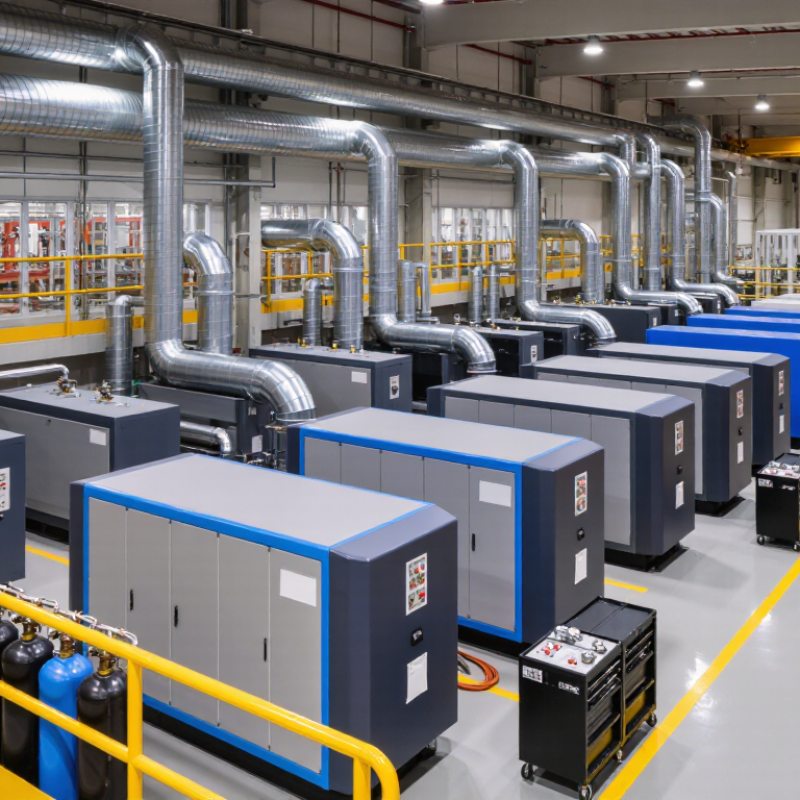
What Makes a Nitrogen Generator Suitable for Industrial Use
An industrial nitrogen generator must match the process, not merely produce nitrogen. Suitability begins with required purity, flow rate, outlet pressure, and operating hours. A packaging line may need steady nitrogen at moderate purity. Metal treatment or laboratory-scale production may demand tighter purity control. The numbers matter.
Experience shows that compressed-air quality often decides performance. Oil, water, and dust can damage adsorption beds or reduce membrane efficiency. Effective prefilters, dryers, and scheduled drain checks protect the system.
Pressure swing adsorption suits many continuous applications, while membrane systems can offer simpler operation at lower purity levels. Cryogenic systems may fit very large volumes, but their complexity requires stronger technical support.
Reliable units include oxygen analyzers, pressure alarms, flow meters, and clear maintenance records. Remote monitoring helps operators notice rising oxygen levels before products are affected.
Redundancy is valuable where a shutdown could stop an entire production shift. Yet oversized equipment wastes energy and increases purchase costs. That mistake is common.
A generator should be tested under real demand, including peak shifts and changing inlet conditions. Commissioning data should confirm purity, recovery, noise, and power consumption. Specifications can look perfect on paper. They can still fail on the factory floor. Operators also need practical training, spare filters, and access to qualified service personnel. A careful site assessment usually matters more than an impressive brochure.
Key Technologies Used in Modern Industrial Nitrogen Generators
Modern industrial nitrogen generators rely on three core technologies: pressure swing adsorption, membrane separation, and cryogenic distillation. Each method suits different production demands.
Pressure swing adsorption uses carbon molecular sieve beds to separate oxygen from compressed air. One bed produces nitrogen while the other regenerates under reduced pressure. This cycle can deliver high purity with responsive flow control. Membrane systems push compressed air through hollow fibers. Oxygen and water vapor pass through faster than nitrogen. The process is compact, quiet, and useful for moderate flow rates. Cryogenic systems cool air until it becomes liquid, then separate gases by boiling points. They support very large production volumes and extremely high purity.
Control technology matters as much as the separation method. Modern units use oxygen analyzers, pressure sensors, flow meters, and remote alarms. A sudden purity drop may indicate moisture, sieve aging, or a blocked filter. In practical plant operation, clean pretreatment is critical. Oil, dust, and liquid water can damage membranes or reduce adsorption performance. Energy use also deserves close attention. A generator may appear efficient, yet an oversized air compressor can waste substantial power. Operators should compare purity, demand patterns, maintenance access, and backup needs. No design is perfect. Small plants often prioritize simplicity, while continuous facilities may need redundancy and detailed performance records.
How to Compare the 10 Best Nitrogen Generators
Comparing the 10 best nitrogen generators requires more than reading purity figures. Start with the process demand. Record required flow, outlet pressure, operating hours, and acceptable oxygen concentration. A laboratory may need 99.999% purity, while packaging equipment may perform well at a lower level. Higher purity can increase energy use. Check the specification at your pressure and temperature, not ideal test conditions. Small details matter.
Review the generation method. Pressure swing adsorption often suits continuous, high-volume production. Membrane systems may offer simpler installation and fewer moving parts. Compare recovery rate, compressed-air quality requirements, noise, footprint, and heat load. Ask for verified data, test methods, and maintenance intervals. A reliable supplier should explain filter replacement, sensor calibration, and alarm behavior clearly. Check relevant independent certifications and documented factory testing. Claims without operating conditions deserve caution.
Calculate total cost over five years. Include compressors, dryers, electricity, spare parts, downtime, and technician visits. Compare service response time too. A low purchase price is not cheap if production stops at midnight. In a real facility, measure purity at the point of use. Pipeline leaks can distort results. I would request a trial or site survey before ranking any unit. My first comparison missed seasonal temperature changes. That was a useful mistake. The strongest choice balances stable gas quality, practical service, and capacity for future demand.
Performance, Safety, and Maintenance Factors to Consider
Choosing among the 10 best nitrogen generators for industrial use requires more than comparing flow rates. Performance depends on nitrogen purity, outlet pressure, energy consumption, and response to changing demand. A unit rated for 500 Nm³/h may struggle if production surges repeatedly. Check real operating data, not only laboratory figures. Purity sensors, stable compressors, and correctly sized storage receivers help prevent interruptions.
Safety deserves equal attention. Nitrogen can displace oxygen without warning, especially in enclosed rooms. Install oxygen-deficiency monitors, effective ventilation, pressure-relief devices, and clear alarm systems. Operators should understand shutdown procedures and verify connections before servicing equipment. A small leak can become serious. Risk assessments should reflect the actual room layout, cylinder storage, and maintenance schedule, rather than relying on generic assumptions.
Maintenance affects performance over time. Replace filters according to pressure drop and contamination levels, then inspect valves, seals, dryers, and compressor oil regularly. Record purity, dew point, pressure, and downtime after each service visit. These records reveal gradual problems before rejected batches appear. In practical plant reviews, maintenance intervals are often copied from manuals without considering dust, humidity, or shift patterns. That approach is convenient, but not always reliable. Calibration also needs attention. A sensor that reads perfectly may still be drifting. Test it against a traceable reference and document the result.
Choosing the Right Nitrogen Generator for Your Facility
Choosing the right nitrogen generator begins with the facility’s actual demand, not a catalog ranking. Record peak flow, operating pressure, purity, and daily runtime for several weeks. A food-packaging line may need stable 99.9% purity, while laser cutting can require much higher purity. Confirm the specification with the process engineer and the gas-quality standard, such as ISO 8573-1.
The air compressor is equally important. The U.S. Department of Energy reports that compressed-air leaks can waste 20% to 30% of compressor output. A poorly maintained air system can therefore make an efficient nitrogen generator look expensive. Check inlet air temperature, pressure stability, dryer performance, and filtration before comparing PSA and membrane systems. PSA usually supports higher purity, while membrane units may suit moderate purity and compact installations. Neither option wins everywhere.
Energy use deserves a measured calculation. The DOE notes that compressed air can represent about 10% of industrial electricity consumption. Compare specific energy consumption, expressed as kilowatt-hours per unit of nitrogen, rather than motor size alone. Include standby losses, filter replacement, maintenance labor, and future production growth. A 20% capacity margin is practical, but excessive oversizing can increase cycling and waste. I would not trust a vendor’s best-case figure without site data, airflow measurements, and a documented acceptance test. The first estimate may be wrong. That is useful to discover early.
10 Best Nitrogen Generators for Industrial Use - Choosing the Right Nitrogen Generator for Your Facility
Representative nitrogen purity targets commonly used across industrial applications. Actual requirements depend on process conditions, safety standards, equipment design, and product specifications.
Higher-purity applications generally require more advanced separation, drying, monitoring, and distribution systems. Use the target purity as an initial selection reference rather than a universal specification.
